Traveling With a Pet: Car and Air Tips
Car safety and comfort for dogs and cats, why pets should never be left in a parked car, air travel considerations, pet-friendly hotels, anxiety relief, and the documents to pack.
An independent educational guide, not a veterinary consultation. Sources, illustrations & editorial standards
Traveling with a dog or cat takes more planning than packing a bag, but it is very doable with the right preparation. Whether it is a short car ride or a cross-country flight, the aim is the same: keep your pet safe, calm, and legally documented. This guide covers car safety, rest breaks, the danger of hot cars, air travel realities, choosing pet-friendly lodging, easing travel anxiety, and the paperwork you should never leave home without.
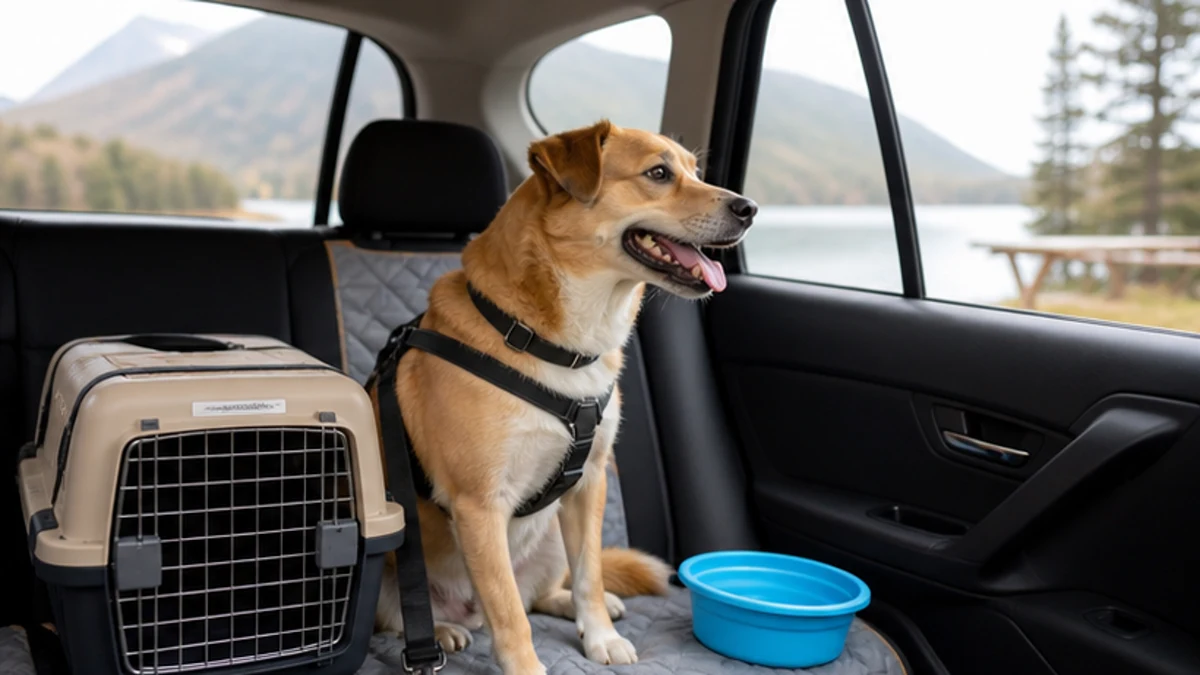
Car travel: safety first
The single most important rule of driving with a pet is restraint. A loose pet in a moving car is a projectile in a crash and a distraction while driving.
Crates and carriers
- A hard or soft crate anchored with a seatbelt keeps a cat or small dog contained and calm.
- Choose a crate your pet can stand, turn, and lie down in, not a tight box.
- Line it with a familiar-smelling blanket to reduce stress.
Harness seat belts
- For medium and large dogs, a crash-tested harness that clips into the seatbelt is a good option.
- Never attach a standard collar to a seatbelt; in a sudden stop a collar can injure the neck.
- The tether should be short enough to prevent the dog from roaming but long enough to sit and lie down.
Where they ride
- The back seat is safer than the front; an airbag can seriously injure a pet.
- Pickup truck beds are unsafe and often illegal for unrestrained animals; use a secured, ventilated crate if a truck is unavoidable, and never leave them exposed.
Plan regular breaks
Dogs need a chance to relieve themselves, drink, and stretch roughly every two to four hours. Stop at quiet rest areas rather than busy ones. Keep the leash on before opening any door, and use a collar tag or harness clip so a startled dog cannot slip out. Offer small amounts of water rather than a big drink at once.
Never leave a pet in a parked car
This rule has no exceptions worth risking. On a mild 70-degree day, the inside of a parked car can reach dangerous heat within minutes, and cracking a window does little. Dogs and cats cool themselves mainly by panting, and a hot enclosed car overwhelms that quickly, leading to heatstroke and death.
If you cannot bring your pet inside with you, leave them at home. Drive-throughs, curbside pickup, and short solo errands are the safer pattern when your pet is along for the ride.
Air travel considerations
Flying with a pet is more complex and should be planned well in advance.
Check the airline first
Every airline sets its own rules for pet travel: which breeds and sizes are allowed, whether pets fly in the cabin or cargo, carrier dimensions, health certificates, and fees. Small cats and dogs often travel in the cabin under the seat in an approved soft carrier, while larger animals may be required in cargo, which carries more stress and risk.
Brachycephalic breeds need special care
Flat-faced dogs and cats, such as Bulldogs, Pugs, and Persians, are at higher risk during air travel because of their breathing anatomy. Many airlines restrict or refuse them in cargo. If you have one of these breeds, discuss the trip carefully with your veterinarian before booking.
Cargo vs cabin
- Cabin travel keeps your pet with you and is generally lower stress for small animals.
- Cargo holds are climate-controlled on reputable airlines but separate your pet from you and add handling steps.
- For any flight, a sturdy, well-ventilated, clearly labeled crate with water attachment is required.
Vet paperwork
Most airlines and many destinations require a health certificate issued within a set window, often ten days of travel. Book the veterinary appointment early so the timing lines up.
Choosing pet-friendly lodging
Not every hotel or rental truly welcomes pets. Before booking:
- Confirm the pet policy in writing, including size limits, fees, and restricted areas.
- Ask about nearby relief spots, elevators, and any breed restrictions.
- Bring your own bedding and a portable crate so the room feels familiar.
- Keep your pet from barking or marking by maintaining routine and supervision.
- Never leave a distressed pet alone in a strange room; anxiety can lead to damage and escape.
Easing travel anxiety
Some pets travel like pros; others fret. You can lower stress:
- Practice short car rides before a long trip so the motion and crate become normal.
- Use a familiar blanket or an unwashed T-shirt with your scent.
- Keep the environment calm: soft voice, steady temperature, gentle music.
- Avoid feeding a large meal right before departure; a light meal a few hours prior reduces nausea.
- Ask your veterinarian about pheromone sprays or, for severe cases, anti-anxiety options before travel. Never give human medications.
Documents and essentials to pack
A travel folder and a small kit save panic at the worst moments.
- Health certificate and vaccination records, especially for flights and border crossings.
- Microchip number and proof of registration; a collar tag with a current phone number.
- A photo of your pet on your phone in case you are separated.
- Enough food for the trip plus extra days, in case of delay.
- Medications, flea and tick prevention, and any supplements.
- Leash, harness, waste bags, a portable water bowl, and a familiar blanket.
- A basic first-aid item or two and your vet’s contact information.
- Emergency vet clinics along your route or at your destination.
Crossing borders and states
Travel between countries or sometimes across regions can require specific vaccines, microchipping, blood tests, or quarantine. Rules change, so check official government and airline requirements well ahead. Assuming you are fine and being turned away at a border is a common and avoidable mistake.
A calm departure plan
The night before, pack the kit and freeze a water bottle to thaw in the cooler. Morning of, a short walk helps your dog settle. Load the crate last so your pet spends less time confined before the engine starts. On arrival, set up the familiar bed first so your pet has a safe base while you unpack.
The short version
Restrain your pet in the car, take breaks, and never leave them in a parked vehicle. For flights, check airline rules early and get veterinary paperwork in time. Choose genuinely pet-friendly lodging, ease anxiety with familiarity and routine, and carry documents and essentials. With preparation, travel becomes one more shared adventure rather than a source of dread.
Settling back in at home
The trip is not over when you unlock the door. Travel can leave a pet mildly off routine, so ease the return.
- Offer water and a bathroom break before anything else, especially after a long drive.
- Resume normal feeding and walk times within a day to rebuild the rhythm.
- Check the paws, coat, and skin for ticks, burrs, or irritation picked up en route.
- Watch for delayed signs of stress or illness, such as reduced appetite or loose stools, and call your vet if they linger.
- Wash the travel blanket and refill the kit so it is ready for next time.
Some pets are thrilled to be home; others need a quiet day to decompress. Both are normal. A calm return protects the gains of a well-planned trip.
Public transit, trains, and ferries
Not every journey is a car or plane. Buses, trains, and ferries each set their own pet rules, from carrier size limits to designated cars. Research the operator before you buy a ticket, carry the same documents and essentials as a road trip, and keep your pet in a secure carrier on your lap or at your feet. Crowded platforms and loud announcements can spike anxiety, so a covered carrier and a familiar scent help your pet feel hidden and safe.
PawPals provides educational content for new pet parents. We are not a veterinary practice, and this article is not a substitute for a veterinarian’s diagnosis or treatment. If your pet shows signs of illness, contact a licensed veterinarian.
Related reading
How Long Do Dogs and Cats Live?
Read dog and cat life-expectancy research with population and age context, and understand why an average is not an individual prognosis.
Read the guideWhy Do Dogs Eat Poop (Coprophagia)?
The common reasons dogs eat stool, whether it is dangerous, practical ways to reduce the habit, training and management tips, and the signs that point to a health problem.
Read the guideIntroducing a Baby to Your Pet
How to prepare dogs and cats during pregnancy, introduce scent before the meeting, set boundaries, run supervised introductions, read stress signs, and keep everyone safe.
Read the guideThis article is for education only and is not a substitute for a veterinarian's diagnosis. If your pet shows unusual symptoms, see a vet.