Daily Feeding Featured
How to Measure Pet Food Without Guessing
A practical guide to cups, grams, calories, treats, and body-condition checks so daily feeding stays consistent.
Read the guide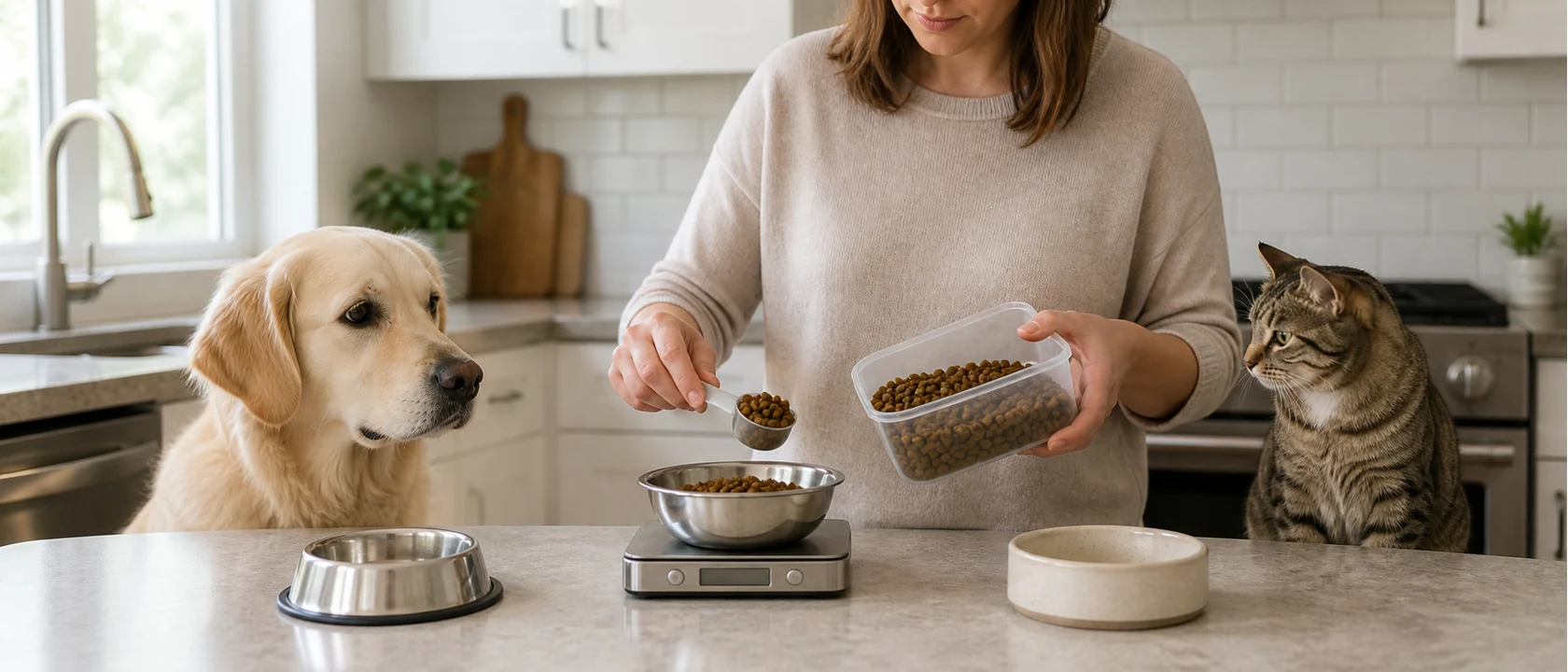
What you feed matters more than price
Food choices, portion sizes, water, transitioning between foods, and treat control — build a sensible daily feeding rhythm and a healthy gut.
Food selection and food quantity are separate decisions. First identify a diet appropriate for your pet with professional guidance where needed. Then read the energy label, measure the established allowance and record what is actually eaten. A calculation cannot assess loss of appetite or nutritional completeness.
Understand what the package does and does not tell you.
Convert the plan into grams and a shared feeding record.
A practical guide to cups, grams, calories, treats, and body-condition checks so daily feeding stays consistent.
Read the guidePlan a food change around the individual animal, compare calorie densities correctly, and know when the timetable should give way to veterinary advice.
Read the guideFind nutritional adequacy, life-stage and calorie information on U.S. pet food labels, and compare guaranteed analysis with its limitations.
Read the guideSeparate weight, body condition and muscle condition, prepare a feeding record, and discuss an individual weight plan with your veterinarian.
Read the guideCheck growth-stage food labels for weaned puppies and kittens and plan meals, monitoring and food changes with your veterinarian.
Read the guideCompare dry and wet foods using nutritional adequacy, calorie density, practical storage and the limits of dental claims.
Read the guideChoose a feeding routine for the individual pet, keep meals and treats accounted for, and record appetite changes without imposing one schedule.
Read the guideAssess an older pet’s diet using weight, muscle, appetite and diagnosed needs rather than automatically cutting calories or protein.
Read the guideIntroduce food puzzles as optional enrichment, check access and safety, and understand why a slow feeder is not protection against bloat.
Read the guideUnderstand food and bowl water together, record changes in drinking, and recognize the limits of home hydration checks.
Read the guideBudget treat calories within the daily total, check individual restrictions, and avoid confusing a small portion with a safe ingredient.
Read the guide