Puppy- and Kitten-Proofing Your Home
A room-by-room guide to removing hazards before a young dog or cat arrives: cords, small swallowables, toxic foods and plants, open toilets and windows, and trash bins.
An independent educational guide, not a veterinary consultation. Sources, illustrations & editorial standards
Puppy- and kitten-proofing is the unglamorous step that prevents most first-month emergencies. Young animals explore with their mouths and paws, and they have no sense of what is dangerous. A home that feels safe to you is full of tempting, hazardous objects to a creature the size of a loaf of bread. The good news is that almost every risk can be removed in an afternoon with a little crawling around at pet height and a short shopping list.
Why proofing comes before the pet
Most “behavior problems” in the first weeks are actually unmanaged hazards. A puppy that chews a cord is not being bad; it found a dangling thing at mouth height. A kitten that knocks over a plant is not spiteful; it saw a moving leaf. If you remove the hazard first, you remove the problem before it starts, and you spare the animal the scolding that comes with it.
Proofing also protects your belongings and your peace of mind. You should be able to leave a puppy or kitten alone in its safe space without wondering what it will destroy or swallow. That freedom matters once the real training begins.
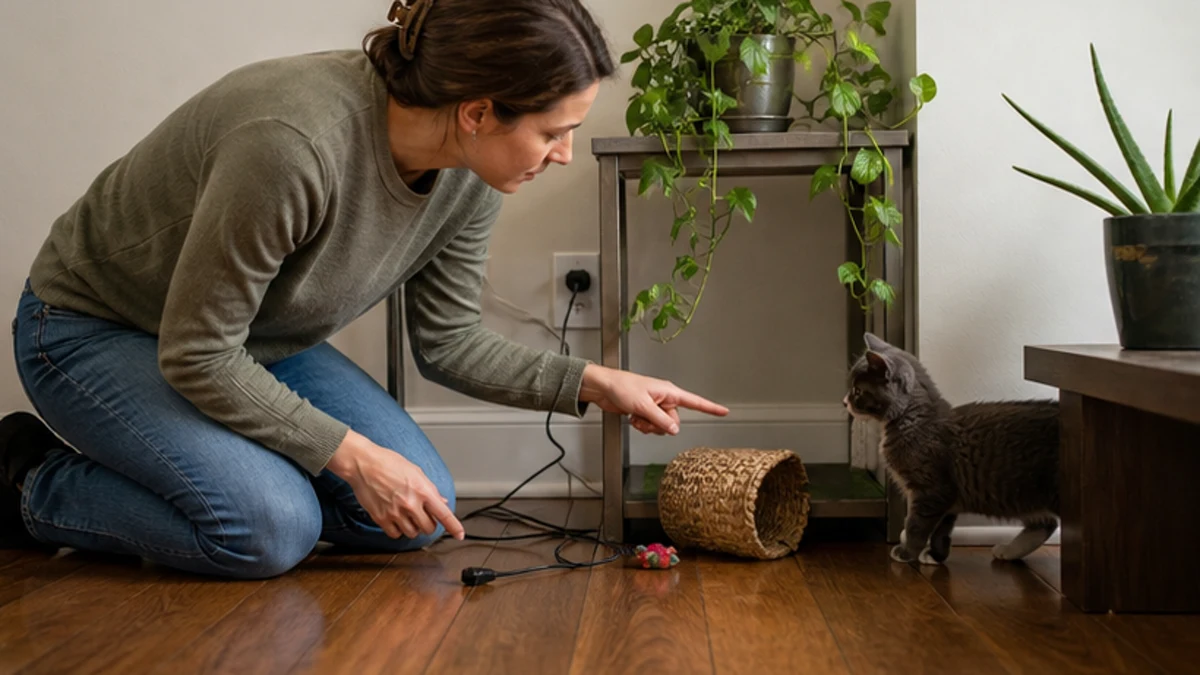
Hazard: electrical cords and chargers
Chewing a live cord can cause burns, electrical shock, or worse. Puppies especially treat dangling cords like tug toys.
- Bundle and secure cords with spiral wrap, cord covers, or cable clips along the wall.
- Move furniture to block access to outlets behind sofas and desks.
- Unplug and store chargers, hair tools, and small appliances when not in use.
- Consider bitter-tasting pet deterrent sprays on exposed cords as a backup, not a primary solution.
Hazard: small swallowables
A young animal will swallow coins, hair ties, rubber bands, children’s toy parts, string, and buttons. Items that pass through can cause intestinal blockages, which are painful and often require surgery.
- Sweep floors daily during the early weeks.
- Keep craft supplies, LEGO, and small toys in closed bins.
- Pick up socks, shoelaces, and loose change.
- Never leave string, yarn, or dental floss where a cat can reach it; linear foreign bodies are especially dangerous.
Hazard: toxic foods and plants
Many human foods are unsafe for pets, and several common houseplants are dangerous, some severely. Lilies are extremely toxic to cats even in tiny amounts, and items like onions, garlic, grapes, raisins, and chocolate are risky for dogs and cats alike.
- Move toxic plants out of the home, or at least into rooms the pet cannot enter.
- Keep food on counters and tables, out of reach, and never leave a plate where a jumping cat or counter-surfing dog can reach it.
- Store trash where it cannot be tipped or ripped open.
- Teach everyone in the home not to feed “just a bite” from the table.
Our separate guide lists the specific plants and foods to avoid, but the rule for proofing is simpler: when in doubt, move it out of reach.
Hazard: open toilets, sinks, and windows
Curious animals fall into toilets or, worse, drink from them. Above-ground homes need secure window screens, because cats in particular slip through small gaps when something outside catches their eye.
- Keep toilet lids closed, or block bathroom access.
- Install secure, properly fitted window screens on every accessible window.
- Check balcony railings for gaps a small pet could squeeze through.
- Never leave a window open without a screen, even “just for a minute.”
Hazard: trash bins
Kitchen and bathroom trash is a buffet of hazards: bones, coffee grounds, sanitary items, and packaging that can obstruct the gut.
- Use bins with locking lids, or keep them inside a cabinet.
- Empty bathroom bins frequently so a kitten cannot pull out something dangerous.
- Watch for scented candle cups, cotton swabs, and floss in bathroom waste.
Room-by-room checklist
Kitchen
- Cabinets with cleaner and food locked or latched.
- Trash in a secured bin or cabinet.
- Counter food stored away; no low fruit bowl a cat can hook.
Living room
- Cords bundled and hidden.
- Remote controls, batteries, and small decor out of reach.
- Houseplants moved or removed.
Bedrooms
- Laundry baskets closed; no loose socks.
- Medications and supplements in a drawer, not on a nightstand.
- Chargers unplugged and put away.
Bathroom
- Toilet lid down.
- Cleaners in a locked cabinet.
- Trash emptied and lidded.
Garage and balcony
- Antifreeze, pesticides, and tools stored behind a closed, latched door.
- No accessible gaps in screens or railings.
Safe spaces and what to buy
You do not need a warehouse of gear, but a few items make proofing reliable rather than hopeful.
- Baby gates to block stairs or off-limit rooms.
- Cord covers or spiral wrap for cables.
- Cabinet childproof latches for cleaners and food.
- A crate or playpen that creates a known-safe zone when you cannot supervise.
- Window screens or guards for any openable window.
- Lidded trash bins for kitchen and bathroom.
Set up one fully safe room first. That is where the animal starts, and it is your fallback whenever you cannot watch closely. A safe space is not a punishment; it is freedom for both of you.
Proofing when children share the home
Homes with kids need one extra layer of thinking, because children create hazards of their own. Small toys, crayons, hair accessories, and craft bits end up on the floor, and a puppy or kitten will treat them as snacks. The simplest fix is a house rule that the pet’s safe room is also the place where small children’s toys are never left loose.
Teach children early that the animal is not a toy. A tail, ear, or paw grabbed in play can make even a gentle pet snap or scratch out of fear, which then gets blamed on the animal. Supervised interaction, at the child’s level on the floor, and short sessions protect both. Where a baby crawls, keep the pet’s water and food bowls and the litter box out of the crawling path for hygiene as much as safety.
Proofing changes as they grow
The hazards shift with age, so treat proofing as a moving target rather than a one-time chore. A teething puppy at three months will chew anything within reach; the same dog at a year is more selective but may counter-surf or dig. A kitten at ten weeks climbs curtains and chews cords; the adult cat may instead knock items off shelves for attention. Re-sweep the home every couple of months and adjust what you secure.
Adolescence is the riskiest stage most owners underestimate. A dog that was safe alone at six months may redecorate the house at nine months if bored. Keep the safe space and the routines in place through this phase, and tighten proofing again rather than assuming the early work still holds. By the time the animal is a settled adult, you can relax many measures, but the basics, closed cleaners, secured cords, and out-of-reach toxins, stay for life.
What proofing is not
Proofing is not about emptying your home or banning all comfort. It is about removing the small number of things that can hurt an animal during its curious first stage. You can keep your plants, your decor, and your routines; you simply move the risky ones out of reach until your pet is older, trained, and less likely to swallow the world.
Spend the afternoon before arrival on this, and you will prevent the most common and most stressful first-month emergencies. A proofed home is a home where a puppy or kitten can explore, learn, and grow without meeting danger at paw height.
PawPals provides educational content for new pet parents. We are not a veterinary practice, and this article is not a substitute for a veterinarian’s diagnosis or treatment. If your pet shows signs of illness, contact a licensed veterinarian.
Related reading
The First 30 Days With a New Pet: A Calm Adjustment Plan
A week-by-week plan for helping a new dog or cat settle in without overwhelming them, from safe rooms and routines to early vet records.
Read the guideThe First 48 Hours With Your New Dog or Cat
A calm, practical guide to your pet's first two days at home: the ride home, a quiet arrival space, the first meal, the first night, and your first vet visit checklist.
Read the guideA Pet-Sitter Handover That Leaves Less to Guess
Build a clear care sheet with feeding units, household rules, contact details and a practice handover. Includes a copyable template and a completed example.
Read the guideThis article is for education only and is not a substitute for a veterinarian's diagnosis. If your pet shows unusual symptoms, see a vet.