Building a Daily Routine for a New Pet
Sample puppy and kitten daily schedules, feeding times, potty breaks, play, and sleep, plus why routines reduce anxiety and how to adjust the plan as your pet grows.
An independent educational guide, not a veterinary consultation. Sources, illustrations & editorial standards
A predictable daily routine is one of the kindest things you can give a new dog or cat. Animals do not worry about the future the way people do, but they thrive on knowing what comes next. When meals, walks, play, and rest happen at roughly the same times, a pet feels safe, learns faster, and gets into far fewer trouble-making moods born of boredom or confusion. This guide gives sample schedules and explains how to build and adjust a routine that fits your life.
Why routines reduce anxiety
A new home is a flood of unknown smells, sounds, and rules. A consistent schedule is the one thing the animal can count on. When the day has a shape, the pet stops scanning for what happens next and starts relaxing into it.
Routines also make training easier. A puppy that eats, then goes outside, then naps learns the pattern and has fewer accidents. A kitten that plays, then eats, then grooms and sleeps follows its natural rhythm and is less likely to treat 3 a.m. as playtime. Predictability is not rigid control; it is a gift of calm.
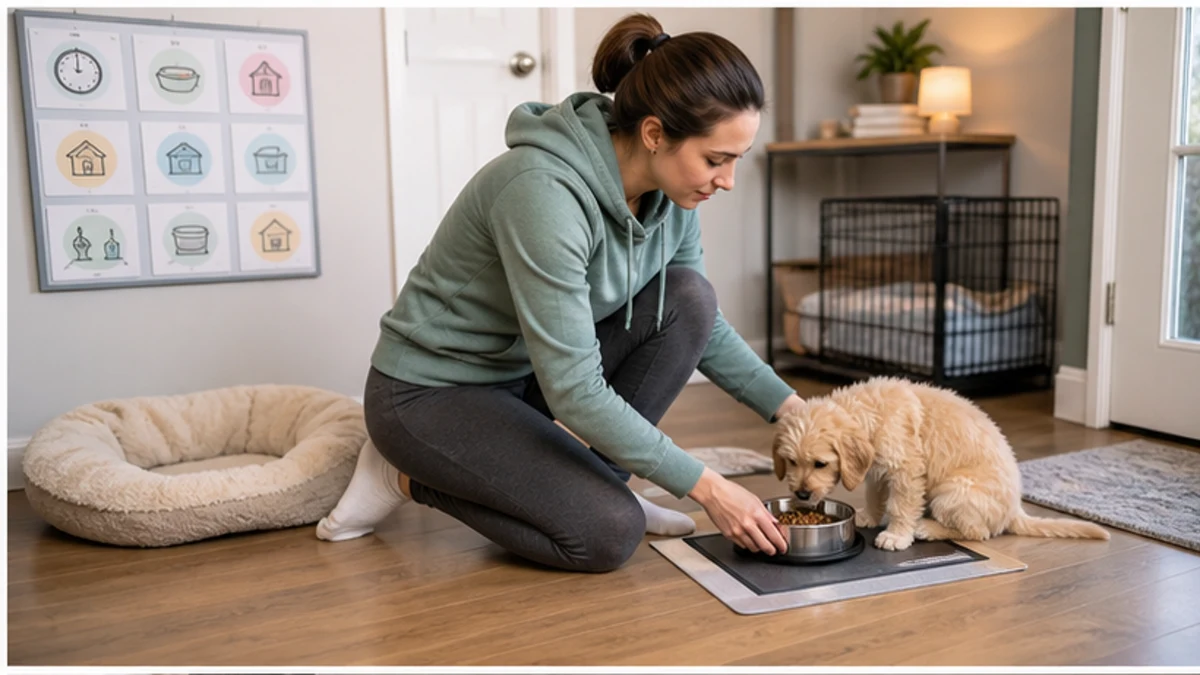
A sample puppy daily schedule
Puppies need frequent meals, frequent potty breaks, and lots of rest. A rough day for a young puppy looks like this:
- 7:00 a.m. – Out for a potty break the moment you wake, then breakfast.
- 7:30 a.m. – Short walk or yard time and a brief training moment.
- 9:00 a.m. – Potty break, then a nap in the crate or bed.
- 11:00 a.m. – Potty break, light play, and a small training session.
- 12:30 p.m. – Lunch, then potty break and another nap.
- 3:00 p.m. – Potty break, play, and exploration in a safe area.
- 5:00 p.m. – Dinner, then potty break and a calm walk.
- 7:00 p.m. – Quiet play or gentle training, then settling time.
- 9:00 p.m. – Final potty break and bedtime in the crate.
Very young puppies also need a middle-of-the-night break around 2 or 3 a.m. As they grow, drop that break and stretch the gaps. The exact clock times matter less than keeping the order and spacing consistent.
A sample kitten daily schedule
Kittens sleep a lot and play in bursts. A rough day looks like this:
- 7:00 a.m. – Greeting, fresh water, and breakfast near the litter box.
- 8:00 a.m. – A short play session with a wand toy, then a nap.
- 11:00 a.m. – Play and a small meal, then grooming and rest.
- 2:00 p.m. – Play session and exploration of a safe room.
- 5:00 p.m. – Dinner, then play; kittens often get a second wind at night.
- 8:00 p.m. – Active play to tire them out, then a calm wind-down.
- 10:00 p.m. – Final meal and litter box access before your bedtime.
Cats are crepuscular, most active at dawn and dusk, so expect bursts then. Match play to those windows and you both sleep better.
Feeding times
Feed at the same times each day. Most puppies do well on three to four small meals until about six months, then two. Kittens similarly need frequent small meals young, moving to two to three as they grow. Consistency helps digestion and makes house-training predictable, because a meal reliably leads to a bathroom need.
Keep meal spots quiet and away from high-traffic areas. Use the same bowl and same food during the early weeks; changes in food or schedule are common causes of stomach upset.
Potty breaks
For puppies, the rule of thumb is a break every couple of hours when awake, plus shortly after eating, playing, or waking. Success outside earns calm praise; accidents inside get no drama and a quick cleanup. A fixed potty spot and a consistent cue word build the habit fast.
For kittens, the routine is about the litter box: scooping daily, keeping it in a quiet spot, and noticing changes in use. A kitten that stops using the box is signaling stress or illness and deserves attention, not punishment.
Play and mental work
Play is not a luxury; it is part of the routine that prevents destructive behavior. Dogs need both physical exercise and mental challenges: training, sniff games, and puzzle feeders. Cats need short, frequent play that mimics hunting, followed by a “catch” so the instinct is satisfied.
Build play into set times rather than only when the animal demands it. A pet that learns play happens after breakfast and before your evening wind-down is calmer between those points, because it trusts the fun is coming.
Sleep and rest
Young animals sleep far more than people expect, often sixteen hours or more for kittens and long stretches for puppies between activities. Protect that rest. A quiet, dark, comfortable spot where the family does not trample is essential. Overtired puppies and kittens get cranky and bitey, much like overtired toddlers.
A consistent bedtime and a defined sleeping place teach the animal when the house is calm. Resist turning night one into a cuddle party if that is not your long-term plan; mixed signals at bedtime are hard to undo.
Adjusting as they grow
Routines are not fixed forever. As your pet matures, the schedule should change with it.
- Drop night breaks as bladder control develops.
- Move from three or four meals to two as the vet advises.
- Increase exercise length for a dog as its body can handle it.
- Shift play windows to match an adult cat’s calmer rhythm.
- Keep the core anchors, mealtimes and bedtime, steady even as details change.
Life will interrupt the routine sometimes, and that is fine. The goal is a dependable shape, not military precision. A pet with a consistent backbone of meals, breaks, play, and rest copes well with the occasional off day.
When the routine slips
Real life interrupts routines, and knowing how to recover matters more than never slipping. A sick night, a late work emergency, or a weekend of travel can shake the schedule. The key is to return to the anchors, meals and bedtime, as soon as you can, because those two fixed points steady everything else.
For planned disruptions like travel, keep feeding times and food consistent even if a sitter handles them, and leave written instructions so the routine survives your absence. For unplanned ones, do not try to “make up” missed walks with an exhausting marathon; a normal-length walk resumes the pattern better than an unusual one. Puppies and kittens are forgiving of the occasional off day as long as the next day returns to form. The habit you are building is resilience through consistency, not perfection, and a pet that trusts the rhythm will bounce back from a wobble without anxiety.
Building your own routine
Start with your real day, not an ideal one. Mark the times you can reliably feed, walk, play, and sleep. Then build the pet’s schedule around those fixed points, filling in the animal’s needs in between. A routine you can actually keep beats a perfect one you abandon by day three.
A new pet does not need a flawless owner. It needs a predictable one. Give it the same meals, the same breaks, the same quiet end to the day, and you will watch anxiety fade and trust take its place, one calm day after another.
PawPals provides educational content for new pet parents. We are not a veterinary practice, and this article is not a substitute for a veterinarian’s diagnosis or treatment. If your pet shows signs of illness, contact a licensed veterinarian.
Related reading
The First 30 Days With a New Pet: A Calm Adjustment Plan
A week-by-week plan for helping a new dog or cat settle in without overwhelming them, from safe rooms and routines to early vet records.
Read the guideThe First 48 Hours With Your New Dog or Cat
A calm, practical guide to your pet's first two days at home: the ride home, a quiet arrival space, the first meal, the first night, and your first vet visit checklist.
Read the guideA Pet-Sitter Handover That Leaves Less to Guess
Build a clear care sheet with feeding units, household rules, contact details and a practice handover. Includes a copyable template and a completed example.
Read the guideThis article is for education only and is not a substitute for a veterinarian's diagnosis. If your pet shows unusual symptoms, see a vet.