First-Time Owner Supplies Checklist
The core items every new dog or cat owner needs, what you can safely skip at the start, and honest generic budget ranges so you can plan without overspending.
An independent educational guide, not a veterinary consultation. Sources, illustrations & editorial standards
Walking into a pet store as a first-time owner feels like being handed an endless list. Aisles of gadgets promise to solve problems you do not yet have. The truth is that a new dog or cat needs a short list of genuinely useful items, and almost everything else can wait until you know your pet’s actual personality. This checklist covers the core gear, what to skip early, and honest generic budget ranges.
The non-negotible core
These are the items you should have before the animal comes home. Everything else is secondary.
- Food and water bowls in a stable material such as stainless steel or ceramic, sized to the animal. Plastic scratches and can harbor bacteria, and some cats get chin irritation from it.
- A bed or crate pad that gives a defined, comfortable place to rest. Soft, washable, and not so plush that a teething puppy will shred it.
- A collar with an ID tag for a dog, or a safe harness and leash. The ID tag is one of the cheapest, most effective lost-pet tools there is.
- A leash for dogs, sized for control and comfort on walks and bathroom breaks.
- For cats, a litter box plus litter, placed in a quiet spot away from food and water.
- A few simple toys suited to the animal’s size and age.
- Basic grooming tools: a brush or comb matched to the coat, and nail care suited to the species.
- An ID tag and, ideally, a microchip registered to your contact details.
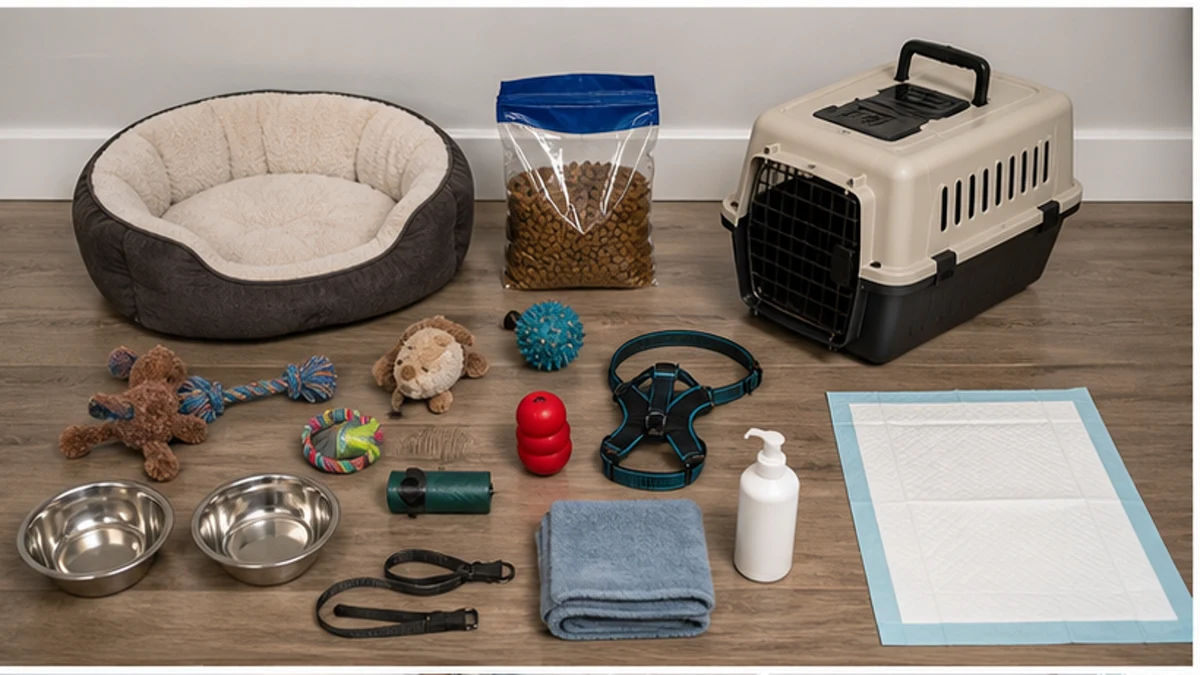
Food and water bowls
Choose wide, shallow bowls for cats to avoid whisker discomfort, and sturdy, tip-resistant bowls for dogs. Have two: one for food, one for water. Keep them in a quiet corner that is easy to clean and will not be bumped during the day. A non-slip mat under them reduces spills and noise.
Bedding and a safe rest spot
A bed is more than comfort; it is a cue. When an animal has a consistent place to settle, it learns where to go to rest, which supports training and calm. Pick a machine-washable bed, because accidents happen in the early weeks. For a dog, a crate or playpen can double as the safe rest spot and a management tool when you cannot supervise.
Collar, harness, and leash
A well-fitted collar should let you slip two fingers underneath without choking. An ID tag with your phone number is the fastest route home if a pet slips out. For walks, a front-clip harness can reduce pulling for many dogs, while a standard leash gives you control. Retractable leashes are popular but offer less control and can cause injuries; a fixed-length leash is the safer beginner choice.
Litter box and litter for cats
Plan for one box per cat, plus one extra, placed in quiet, separate locations. Covered boxes suit privacy but trap odor, so scoop daily. Start with an unscented clumping litter, which most cats accept and which makes cleaning straightforward. Skip the automatic boxes until your cat is reliably using a basic one.
Toys that actually get used
You do not need a toy bin the size of a small car. A few well-chosen items beat a pile of ignored ones.
- For dogs: a chew toy suited to size and age, a fetch toy, and a puzzle feeder for mental work.
- For cats: a wand toy for play, a small ball, and a scratching post or pad to protect furniture.
Rotate toys rather than offering all at once; novelty keeps them interesting. Avoid toys with small parts that can be swallowed.
Grooming basics
Match the tool to the coat. Short coats need a soft brush; long coats need a comb that reaches the undercoat. Nail care matters for both species; ask your vet or a groomer to show you the safe method before you try it alone. A pet-safe toothbrush and toothpaste are worth adding early, because dental care prevents painful problems later.
ID and the microchip
An ID tag is the first line of defense; a microchip is the backup that cannot fall off. If your shelter or clinic offers microchipping, do it, and register the chip to your current phone number and address. A chip with outdated contact details helps no one.
What you can skip early
New owners waste the most money here. Hold off on these until there is a real need:
- Expensive training gadgets and shock collars, which are unnecessary and can harm trust.
- A mountain of novelty toys and costumes.
- Automatic litter boxes or feeders before basic routines are set.
- Designer beds and outfits that a puppy will likely chew.
- Expensive supplements or foods with health claims you have not verified with a vet.
- Pet insurance is worth considering, but research it calmly rather than buying the first plan pitched at checkout.
Honest generic budget ranges
Prices vary widely by region and quality, so treat these as rough guidance rather than quotes. The point is proportion: most of your money should go to the few items that matter.
- Bowls and basics: a modest one-time cost for sturdy stainless or ceramic.
- Bed and crate or carrier: a mid-range one-time cost; buy once, sized to adult size.
- Collar, harness, leash, ID tag: a small one-time cost, and tags can be remade cheaply.
- Litter box and a starter supply of litter: a small ongoing cost that repeats monthly.
- Toys and grooming tools: a small one-time cost, with occasional replacement.
- Food: the largest repeating cost, scaled to the animal’s size and the diet your vet supports.
Spend more on the items that last and affect safety (bed, crate, leash, ID) and less on the items that are pure novelty. A well-chosen short list serves a new pet better than a cart full of things it ignores.
Setting up a pet station
Once the items are bought, where they live matters as much as what they are. A designated pet station, one spot holding food, bowls, leash, waste bags, and grooming tools, saves daily friction and keeps you consistent. For a dog, that might be a shelf by the door where the leash and bags live, so walks never start with a search. For a cat, keep the litter supplies near the box with a small scoop and spare liners.
Store food in a sealed container to keep it fresh and unappealing to pests, and keep it off the floor. Rotate toys through a closed bin so the ones in use stay interesting. Keep cleaning supplies for accidents, enzyme cleaner, paper towels, in the same area so a mistake is easy to handle calmly. A tidy station turns scattered chores into a short, repeatable routine, which is exactly what a new pet needs from you.
A simple shopping order
- Bowls, bed, and a safe rest spot.
- Collar, ID tag, leash, or litter box and litter.
- A few appropriate toys and a brush.
- A starter bag of the same food the animal was eating.
- Microchip registration if not already done.
Buy the first three groups before arrival. Add the rest within the first week as you learn your pet. You will quickly see which “extras” your specific companion actually wants, and you can spend there with confidence instead of guessing.
PawPals provides educational content for new pet parents. We are not a veterinary practice, and this article is not a substitute for a veterinarian’s diagnosis or treatment. If your pet shows signs of illness, contact a licensed veterinarian.
Related reading
The First 30 Days With a New Pet: A Calm Adjustment Plan
A week-by-week plan for helping a new dog or cat settle in without overwhelming them, from safe rooms and routines to early vet records.
Read the guideThe First 48 Hours With Your New Dog or Cat
A calm, practical guide to your pet's first two days at home: the ride home, a quiet arrival space, the first meal, the first night, and your first vet visit checklist.
Read the guideA Pet-Sitter Handover That Leaves Less to Guess
Build a clear care sheet with feeding units, household rules, contact details and a practice handover. Includes a copyable template and a completed example.
Read the guideThis article is for education only and is not a substitute for a veterinarian's diagnosis. If your pet shows unusual symptoms, see a vet.