The One-Week Countdown Before Bringing a Cat or Dog Home
A practical seven-day checklist covering home safety, essential supplies, and your pet's first vet and deworming appointment.
An independent educational guide, not a veterinary consultation. Sources, illustrations & editorial standards
Bringing a dog or cat into your home is one of the most rewarding decisions you can make, but the seven days before your new companion arrives are the most important window for preparation. Animals do not understand that you are “still getting ready.” The moment they walk through the door they are exploring, chewing, hiding, and learning. If the environment is safe and the basics are in place, the first days become a calm bonding period instead of a frantic scramble. This guide walks you through a day-by-day plan for the week before arrival, covering home safety, supplies, and booking that first vet and deworming appointment.
Why a one-week head start matters
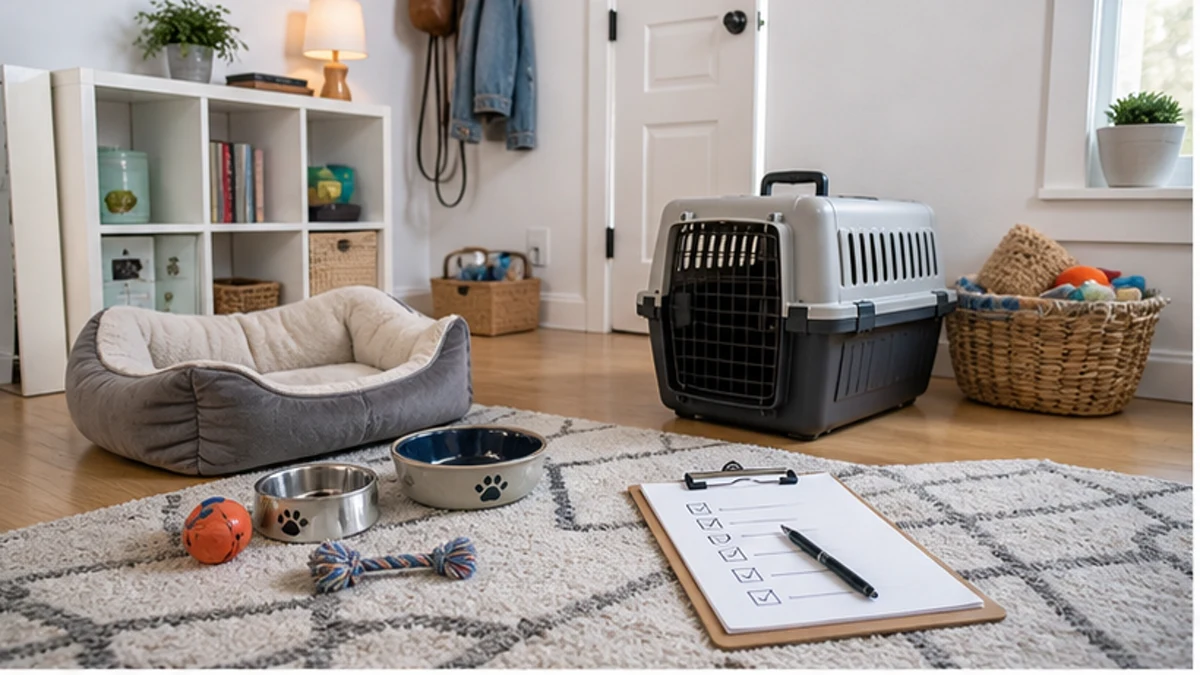
Most problems in a pet’s first month trace back to two gaps: an unsafe space and missing essentials. A loose electrical cord suddenly becomes a chew toy. A bar of chocolate left on the counter is a poisoning risk for a dog. A cat with no quiet, private litter area may stop using the box altogether. None of these issues are complicated to fix, but they are almost impossible to fix while a nervous animal is already underfoot and learning bad habits. Starting a full week out gives you time to shop, assemble, and do a slow safety sweep without pressure.
Set a realistic plan. Spread the work across the seven days rather than doing everything the night before. A calm, prepared owner sets the tone for a calm pet. If you are adopting from a shelter, the staff may also give you a target arrival date, so you can anchor your countdown to that.
Days 7 to 5: Make the home safe
Begin with a “pet safety sweep” of every room the animal will be allowed to access. Get down on your hands and knees if you can; this changes your perspective and helps you spot hazards at a pet’s eye level that you would otherwise miss from standing height.
- Tuck away or cover electrical cords, phone chargers, and lamp wires. Chewing live cords can cause painful burns or worse. Cord covers, spiral wrap, or simply moving furniture to block access all work well.
- Store medications, vitamins, cleaning supplies, and laundry detergent pods inside closed cabinets. Many human medicines, including common over-the-counter pain relievers, are toxic to dogs and cats even in small doses.
- Know your plants. Lilies are extremely toxic to cats even in tiny amounts, and several other common houseplants are risky too. When in doubt, move the plant out of reach or out of the home entirely.
- Secure windows and balconies. For homes above the ground floor, install secure screens or guards. Cats in particular can slip through a surprisingly small gap when curious.
- Put away small objects a puppy might swallow: coins, hair ties, children’s toys with detachable parts, string, and rubber bands.
- Lock away trash. A lidded bin, or one kept inside a cabinet, prevents scavenging that can lead to intestinal blockages.
Safety tip: The goal is not a perfectly emptied home. It is a home where a curious animal cannot easily reach something dangerous during its first exploratory hours.
Days 5 to 3: Buy the essentials, not the extras
You do not need a warehouse of gadgets. Focus on the basics that meet daily needs, then add comfort items once you know your pet’s personality. Buying a few thoughtful items beats buying a cart full of things your pet may ignore.
For a dog:
- Two bowls, one for food and one for water, in a stable material such as stainless steel or ceramic, sized to the dog’s breed.
- A well-fitting collar with an ID tag, plus a leash for walks and bathroom breaks.
- A crate or a defined bed area that gives the dog a quiet, den-like place to rest.
- Chew toys suited to the dog’s size and age, since inappropriate chewing is common in the early weeks.
For a cat:
- At least one litter box per cat, plus one extra. A single-cat home should have two boxes, placed in quiet, separate spots away from the food bowl.
- A scratching post or pad to protect your furniture and let the cat stretch.
- Food and water bowls, ideally wide and shallow to avoid whisker discomfort.
- A cozy bed and a few simple toys such as a wand or a small ball.
For both:
- A high-quality starter food. If the shelter or breeder gave you a specific brand, buy the same one to avoid an immediate diet change. (Our feeding guide explains why sudden switches upset stomachs.)
- A brush or comb appropriate to the coat type.
Skip the mountain of novelty toys for now. You can learn what your pet actually enjoys after arrival and shop accordingly.
Day 2: Choose where everything goes
Pets feel safer when their key resources have fixed, predictable spots. Decide now where the bed, bowls, litter box, and crate will live. Moving these around in the first week adds avoidable stress and can undo house-training progress.
For cats, place the litter box in a low-traffic area with an easy escape route, never next to the food or water. For dogs, set up the crate or bed in a spot where the family gathers but that is not directly in a busy walkway. Keep food and water in a quiet corner that is easy to keep clean and that will not be bumped during the day.
This is also the right moment to agree on house rules with everyone in the household. Will the pet be allowed on the sofa? Who is responsible for feeding? What time is the last bathroom break? Consistency in the first week pays off for months, because pets learn expectations quickly and become confused when rules change daily.
Day 1: Book the first vet and deworming appointment
Before your pet arrives, call a local veterinary clinic and book a wellness visit for within a few days of homecoming. This first appointment is about far more than shots. It is a baseline exam: weight, temperature, coat condition, teeth, heart, and a conversation about parasite prevention tailored to your area.
Ask the clinic about deworming and flea control. Many young animals carry roundworms or hookworms, and a first deworming is routine and safe when done under veterinary guidance. Use our deworming reminder tool to record the date and set the next one, so the schedule never slips your mind during the busy first weeks.
Bring any records you received from the shelter, breeder, or rescue. If you do not have prior vaccine history, the vet will build a plan from scratch rather than guess. Write down your questions beforehand, because it is easy to forget them in the exam room.
Remember: a vet, not a website, should confirm your pet’s health plan. If the clinic finds anything unusual, follow their guidance exactly and schedule any follow-up they recommend.
The arrival day itself
On the day, keep things quiet. Let the pet explore one room first rather than the whole house, which can feel overwhelming. For a dog, a short, calm leash walk to the bathroom spot helps establish routine immediately. For a cat, open the carrier in a small room and let it come out on its own schedule rather than pulling it out.
Have fresh water available right away and offer the familiar starter food in small amounts. Avoid a big welcome party with many visitors; new animals need to decompress and learn that this new place is safe. Sleep may be restless for the first night or two, which is completely normal as your pet adjusts to unfamiliar sounds and smells.
A simple pre-arrival checklist
- Home safety sweep complete in all accessible rooms
- Windows and balconies secured against escapes
- Food, bowls, bed, and litter box or leash purchased
- Litter boxes or crate placed in their final spots
- Vet appointment booked within the first week
- Deworming and parasite plan discussed with the clinic
- Household rules agreed and written down
- Emergency vet contact saved in your phone
Taking these steps in the seven days before arrival turns a potentially chaotic moment into a confident start. Your future dog or cat will not notice the planning, but it will feel the calm and safety you created from day one.
This article is for education only and is not a substitute for a veterinarian’s diagnosis. If your pet shows unusual symptoms, see a vet.
Related tools
Related reading
The First 30 Days With a New Pet: A Calm Adjustment Plan
A week-by-week plan for helping a new dog or cat settle in without overwhelming them, from safe rooms and routines to early vet records.
Read the guideThe First 48 Hours With Your New Dog or Cat
A calm, practical guide to your pet's first two days at home: the ride home, a quiet arrival space, the first meal, the first night, and your first vet visit checklist.
Read the guideA Pet-Sitter Handover That Leaves Less to Guess
Build a clear care sheet with feeding units, household rules, contact details and a practice handover. Includes a copyable template and a completed example.
Read the guideThis article is for education only and is not a substitute for a veterinarian's diagnosis. If your pet shows unusual symptoms, see a vet.