Reading Your Dog's Body Language
Decode tail, ears, eyes, whale eye, play bows, stress yawns, and growls so you can respect your dog's boundaries and know when to back off.
An independent educational guide, not a veterinary consultation. Sources, illustrations & editorial standards
Your dog talks all day, just not with words. A wag, a sideways glance, a yawn, a lowered head — each is a sentence in a language every owner can learn. Reading body language is not a party trick; it is the foundation of a safe, trusting relationship. When you understand what your dog is saying, you can step in before a problem, respect his boundaries, and avoid the most common mistake owners make: missing the warning signs until a bite happens. This guide walks through the signals you will see most, and how to respond.
Start by reading the whole dog
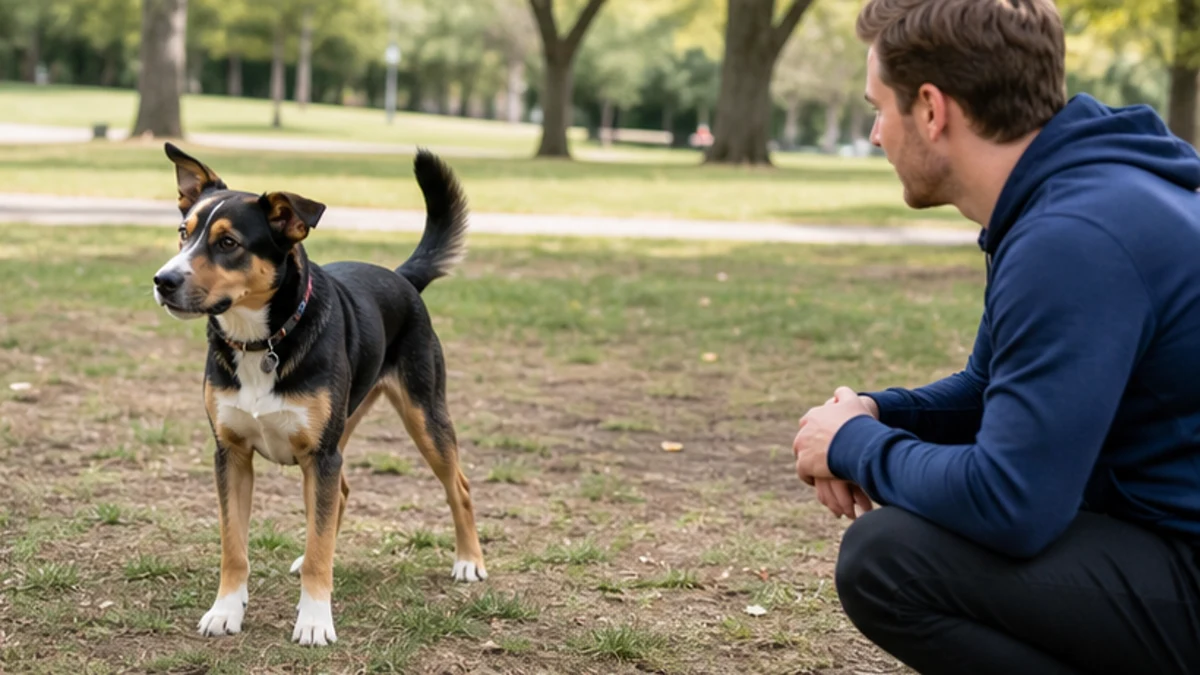
A single tail wag means little on its own. Always read the full picture: tail, ears, eyes, mouth, body posture, and the situation. A wagging tail with a soft body and loose hips is joy; a wagging tail with a stiff body and hard stare is something else entirely. Context decides meaning. Build the habit of looking at the dog as a whole before drawing a conclusion.
The tail tells a story
The tail is the flag everyone notices, but its meaning depends on more than motion.
- Loose, wide wag at body level. Happy, relaxed greeting. The whole rear may wiggle.
- High, stiff, fast wag. Alert, aroused, or tense. Not always friendly; watch the rest of the body.
- Low or tucked tail. Fear, anxiety, or submission. A tail clamped under the body says “I am uncomfortable.”
- Slow tail wave. Uncertainty or careful assessment of a situation.
- Breed note. Some dogs have curled tails or docked tails that limit the signal. Learn your individual dog’s neutral and watch for changes from his normal.
A wag is not automatically “happy.” Speed, height, and stiffness matter more than the fact of wagging.
Ears, eyes, and the face
Ears and eyes give away emotion fast.
- Soft, relaxed ears. At ease. In floppy-eared dogs, look for the base; a relaxed base sits naturally.
- Forward, pricked ears. Interest or alertness; the dog is locked on something.
- Pinned back ears. Fear, anxiety, or appeasement. Often paired with a lowered body.
- Soft eyes with blinks. Calm and friendly. A dog who blinks and looks away is being polite.
- Hard stare. A fixed, unblinking look, often with narrowed eyes, can be a challenge or a warning. Respect it; do not stare back.
“Whale eye” deserves special attention: the dog turns his head away but shows the whites of his eyes by looking sideways. It is a clear sign of discomfort, anxiety, or that he wants space. Common right before a snap, especially when a dog is guarding a resource or cornered.
The play bow and invitation
Not all signals are warnings. The play bow is the clearest “let’s have fun” message.
- Play bow. Front legs down, rear up, tail wagging. It says “I am playing, not fighting.” Dogs use it to start play and to reset after a rough moment.
- Bouncy, loose movements. A dog who moves like a spring, zigzagging and bowing, is inviting interaction.
- Relaxed open mouth. A soft, slightly open mouth with a “smile” look signals contentment during play.
- Role reversal. Dogs take turns being on top during play; true play is balanced, not one dog always overwhelming the other.
When you see a play bow, you can relax; the dog is telling you the roughhousing is friendly.
Stress signals you should not ignore
Dogs show stress long before they growl. These “calming signals” ask for space or try to defuse tension.
- Yawning when not tired. A stress yawn is a classic sign of discomfort, often in the vet waiting room or a tense meeting.
- Lip licking with no food. Quick tongue flicks signal unease.
- Turning the head away. The dog politely says “I do not want this right now.”
- Shaking off when dry. Like shaking water, but with no water; it is a reset after stress.
- Panting at rest in cool air. Can signal anxiety as well as heat.
- Whale eye and freezing. A stiff, still dog who watches you sideways is at the edge of tolerance.
Spotting these early lets you remove the dog from the stressful situation before it escalates.
Growling is communication, not disobedience
Many owners punish a growl. That is a serious mistake. A growl is a warning, the dog’s way of saying “I am uncomfortable, back off.” It is the sentence before the bite.
- Never punish the growl. A dog who is punished for growling learns to skip it and bite without warning. You lose your early alert system.
- Respect the message. When a dog growls, the right response is to calmly create distance and figure out the cause: fear, pain, resource guarding, or overload.
- Then address the cause. A dog who growls over food may need space at meals and a vet check for pain; a dog who growls at strangers may need gradual, positive socialization. The growl is data, not defiance.
A dog who can growl is doing you a favor. Thank him silently and change the situation.
Respecting boundaries
Reading the language is only useful if you act on it. Respecting boundaries builds trust.
- Honor the “no.” If a dog turns away, moves off, or shows stress when petted, stop. Forcing affection teaches him he must escalate to be left alone.
- Let him choose contact. A dog who comes to you for pets is a willing partner; one who leans away is asking for space.
- Watch children. Kids miss subtle signals. Teach them to read whale eye, tucked tail, and walking away, and to leave a dog alone when he shows them.
- Manage greetings. Do not let strangers or dogs crowd your dog if his body says uneasy. Advocate for him; it prevents bad outcomes.
- Give retreat options. A dog who can move away from a stressor is far safer than one cornered with no exit.
When to back off completely
Some combinations mean stop all interaction now:
- Stiff body, hard stare, whale eye, and frozen stillness.
- Growl or snarl with raised lips and visible teeth.
- Raised hackles (the fur along the back) with a fixed posture.
- A cornered dog with no way out who is showing fear signals.
- Sudden behavior change: a normally soft dog who snaps may be in pain.
In these moments, stay calm, avoid eye contact, give the dog room, and remove whatever is stressing him. If pain or a sudden change is involved, a vet visit comes first, because behavior change can be a sign of illness.
The payoff of fluency
Learning canine body language changes everything. You will see the stressed yawn at the clinic and soothe your dog early. You will notice the play bow and join the game. You will catch the whale eye and give space before a snap. Most bites happen because a human missed or ignored the steps that came before. Read the whole dog, trust what he shows you, respect his boundaries, and you build a relationship where he feels understood — and a dog who feels understood is a calmer, safer, happier companion.
PawPals provides educational content for new pet parents. We are not a veterinary practice, and this article is not a substitute for a veterinarian’s diagnosis or treatment. If your pet shows signs of illness, contact a licensed veterinarian.
Related reading
Teaching Sit, Stay, and Come
Use positive reinforcement and lure-reward training to teach sit, stay, and recall, with proofing steps and common mistakes to avoid.
Read the guidePuppy Biting and Nipping: Teaching Bite Inhibition
Understand why puppies mouth, use yelp-and-stop and toy redirection, manage overtired biting, and know normal vs concerning behavior.
Read the guideWhy Cats Scratch and How to Redirect It
Understand the natural need to scratch, choose and place the right posts, try nail care, and redirect furniture scratching without ever declawing.
Read the guideThis article is for education only and is not a substitute for a veterinarian's diagnosis. If your pet shows unusual symptoms, see a vet.