Enrichment Ideas for Dogs and Cats in Small Homes
Simple, low-cost enrichment routines for apartments and small homes, using sniffing, climbing, puzzles, and calm training.
An independent educational guide, not a veterinary consultation. Sources, illustrations & editorial standards
A small home is not a bad home for a pet. The problem is not square footage; it is boredom, noise, and a lack of choices. Dogs and cats need ways to sniff, chase, chew, climb, scratch, solve small problems, and rest without being interrupted. Good enrichment gives those needs legal outlets so behavior problems have less room to grow.
Start with the species
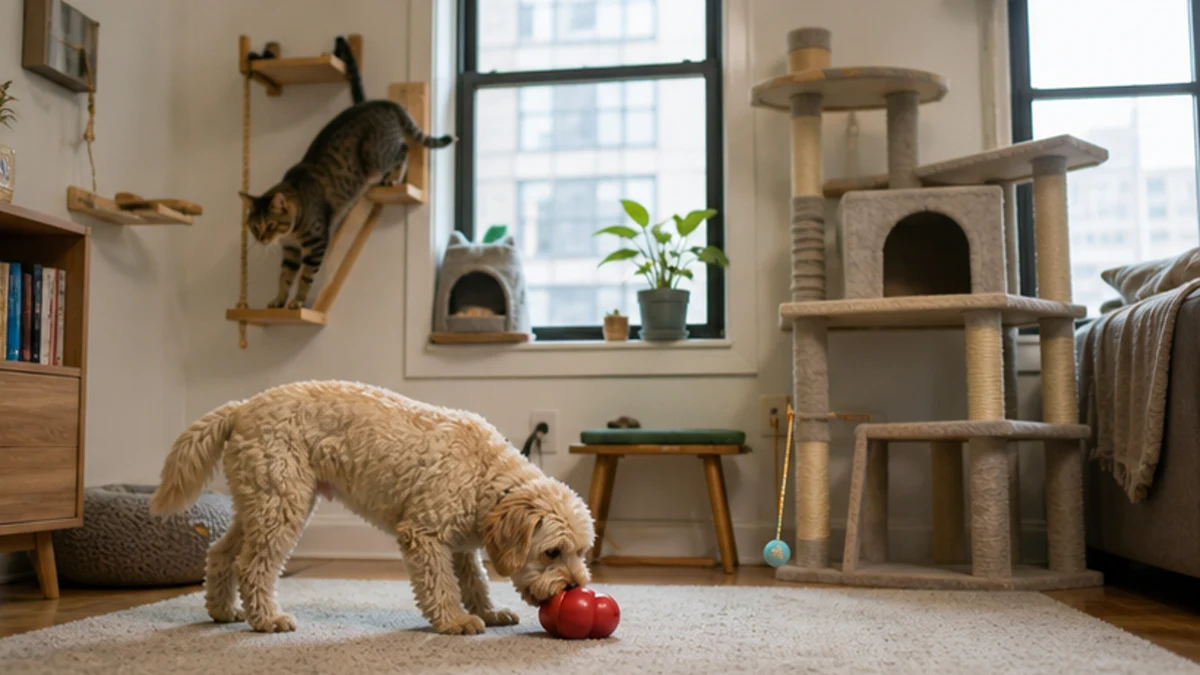
Dogs are scent-driven. A five-minute sniff game can calm some dogs more than a fast walk around the block. Hide a few pieces of kibble in a towel, scatter part of a meal across a clean mat, or ask for simple cues around the room. Let the nose work.
Cats are hunters and climbers. They often prefer short bursts of play, not one long session. Use a wand toy that moves like prey: hide, pause, dart, and let the cat catch it sometimes. Add vertical space where possible, such as a sturdy cat tree, window perch, or cleared shelf.
For both species, novelty matters but does not require buying more. Rotate toys. Put three toys away and bring out two old ones next week. A toy that returns after a break often feels new again.
Use meals as enrichment
Food bowls are efficient, but they are not the only option. Puzzle feeders, snuffle mats, slow feeders, and scatter feeding turn daily calories into work the pet enjoys. Start easy. A puzzle that is too hard creates frustration, not enrichment.
For dogs, roll kibble in a towel or use a cardboard box with paper inside under supervision. For cats, place a few pieces of dry food on different safe surfaces so they have to search and climb. Wet food can go on a lick mat, which slows eating and gives a calming licking activity.
Keep safety simple: supervise new setups, avoid string or small parts that can be swallowed, and clean food toys often.
Build a quiet zone
Enrichment is not constant entertainment. Rest is part of behavior health. Every pet needs a place where people do not follow them. In a small home, that may be a crate with the door open, a covered bed, a cat tree cubby, or a blanket behind furniture.
Teach the household that the quiet zone is off limits. This matters especially for children and visitors. A pet that can retreat is less likely to growl, swat, bite, or hide in unsafe places.
Add five-minute training
Training is enrichment when it is short, clear, and rewarded. Practice name response, sit, touch, mat work, carrier entry, or leash check-ins. Stop before the pet gets bored. The point is communication, not performance.
For cats, reward tiny choices: looking at the carrier, stepping onto a mat, touching a target, or using a scratcher. For dogs, reward calm behaviors you want to see more often, such as lying on a bed while you cook.
Small homes can support rich lives when the day has variety and rest. Think in minutes, not hours: sniff, chase, climb, chew, puzzle, train, sleep. Repeated daily, those small outlets become a calmer household.
This article is for education only and is not a substitute for a veterinarian’s diagnosis. If your pet shows unusual symptoms, see a vet.
Related reading
Teaching Sit, Stay, and Come
Use positive reinforcement and lure-reward training to teach sit, stay, and recall, with proofing steps and common mistakes to avoid.
Read the guidePuppy Biting and Nipping: Teaching Bite Inhibition
Understand why puppies mouth, use yelp-and-stop and toy redirection, manage overtired biting, and know normal vs concerning behavior.
Read the guideReading Your Dog's Body Language
Decode tail, ears, eyes, whale eye, play bows, stress yawns, and growls so you can respect your dog's boundaries and know when to back off.
Read the guideThis article is for education only and is not a substitute for a veterinarian's diagnosis. If your pet shows unusual symptoms, see a vet.