House Training a Puppy: Step by Step
A clear schedule, sharp reward timing, enzymatic clean-up, bell training, and night routines that get a puppy reliably house trained.
An independent educational guide, not a veterinary consultation. Sources, illustrations & editorial standards
House training is the first big project every puppy owner faces, and it is easier than most people fear. A puppy is not being stubborn when he has an accident; he simply has not learned yet where the bathroom is, and his bladder is tiny. Your job is to set a predictable rhythm, reward the right spot the instant it happens, and clean mistakes so completely that the scent never calls him back. Done with patience, most puppies get the idea in a few weeks. Done with anger, the process stretches for months and trust suffers.
Start with a realistic schedule
A puppy’s bladder is a clock you can almost set. The common rule is one hour of holding time per month of age, up to about eight hours for an adult. So an eight-week puppy needs a break roughly every two hours during the day. Build your day around that limit rather than testing it.
A typical young-puppy day looks like this:
- On waking. Carry or lead him outside the moment his eyes open. Puppies need to go right after sleep.
- After every meal. Food moving through the gut triggers the need to empty. Ten to thirty minutes after eating, out he goes.
- After play. Excitement loosens the bladder. A five-minute zoomie session means a potty trip.
- After drinking. Water goes through fast in a small body.
- Every two hours even with no obvious trigger, plus once overnight for very young pups.
Write the schedule on the fridge. Consistency is the whole game. A puppy who goes out at the same times every day learns the pattern faster than one whose owner guesses.
Reward timing is everything
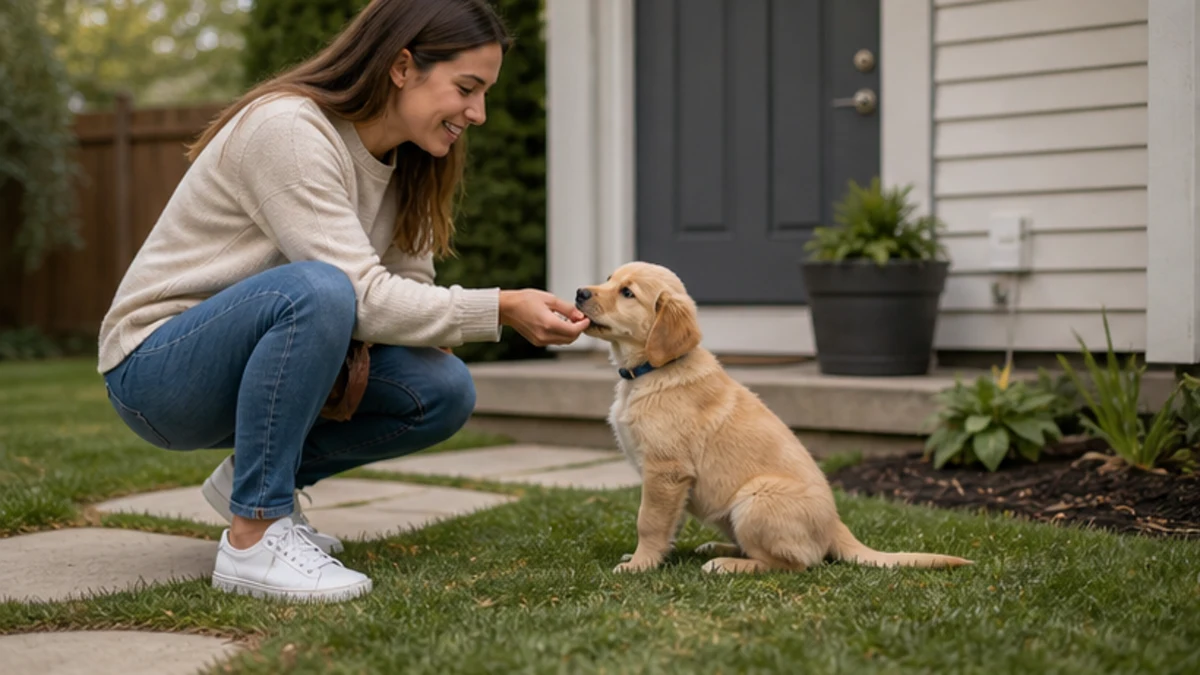
The single biggest secret is to reward outside, at the moment he finishes, not when you come back in. Take him to one chosen spot in the yard. The moment he squats or lifts a leg and relieves himself, say a calm “yes” and give a tiny treat right there on the grass. The treat must land within a second or two of the act, so the lesson is “going here pays.” Praise on the way back in is nice but it does not teach the spot; the reward at the spot does.
If he does not go within a few minutes, lead him back inside, watch him like a hawk for ten minutes, then try again. Do not let him roam free during that wait, or the accident will happen under your nose. Keep him on a leash in the yard until he reliably goes on command; a puppy off leash in a big yard often forgets why he is there and starts eating grass.
Use the same cue word, like “go potty,” as he begins. Soon the word predicts the act, and you can prompt him in the rain when you would rather not wait.
What to do about accidents
Accidents will happen. How you respond decides whether they repeat.
- Caught in the act. Calmly interrupt with a neutral sound, like “oops,” and scoop him outside to finish. If he finishes there, reward. Do not yell; fear makes a puppy hide to go, which is the opposite of what you want.
- Found later. Never punish. He cannot connect a scolding five minutes after the fact with the puddle. Just clean it silently.
- The scent trap. Dogs return to the same spot because urine smell is a trigger. Ordinary cleaner masks odor for your nose but not for his. Use an enzymatic cleaner made for pet messes; it breaks down the proteins so the scent truly disappears.
- Watch for patterns. If accidents always happen by the front door, he may be signaling there. If always after a nap, your schedule gap is too long. Patterns tell you what to fix.
Bell training for clear requests
Once your puppy is mostly clean, you can teach him to tell you when he wants out. A hanging bell on the door is the classic method, and it prevents the “he just stood at the door and I missed it” problem.
- Hang a small bell (or two) on a string at nose height on the door you use.
- Before every successful outside trip, gently tap his paw or nose to the bell so it rings, then open the door.
- In a few days he connects “ring bell, door opens.” Let him ring it himself and immediately go out.
- Reward the trip outside as usual. The bell is just the request line; the reward is still the potty outside.
A useful caution: some smart puppies learn the bell means “outside fun” and ring it to play. If that happens, only reward and play after he actually goes potty; the trip outside without a result becomes less interesting.
Nighttime without stress
Nights are where new owners lose the most sleep, but a plan helps.
- Crate or pen beside your bed. A puppy alone in a far room panics. Hearing you nearby lets him settle. Many owners keep the crate next to the bed for the first weeks.
- Last potty trip late. Take him out right before you sleep, then carry him out once overnight if he is under four months.
- Keep nights boring. No play, no bright lights, no long cuddles at 3 a.m. Quiet outing, quiet return. You are teaching that night is for sleeping.
- Limit water before bed. A final drink an hour before sleep, then pick up the bowl. Do not withhold water all day; only tighten the last hour.
- Expect progress. Most puppies sleep through by four to five months. Until then, the overnight break is temporary, not a life sentence.
When regression happens
A puppy who was clean for two weeks and suddenly slips is not being naughous. Look for a cause before you correct anything.
- A growth spurt. Bigger body, bigger bladder, sometimes temporarily less control. Tighten the schedule for a few days.
- A change at home. A move, a new person, a new pet, or a schedule shift can unsettle a puppy and break habits.
- Excitement overload. A busy day with guests often ends in an accident. Manage with more frequent trips during chaos.
- A medical issue. Sudden loss of house training, straining, blood in urine, or asking to go constantly can signal a urinary infection or other problem. This is a vet matter, not a training failure. If the change is sudden and not explained by routine, book a check-up.
- Marking. Adolescent dogs, especially unneutered males, may start marking vertical surfaces. That is a different behavior from a house-training lapse and often improves after neutering plus management; discuss with your vet.
Building the habit for life
The fastest path is prevention plus praise. A puppy who is never given the chance to fail, because you managed his schedule, learns clean faster than one who is scolded for failing. Keep him tethered to you with a leash indoors, or in sight, during free time, so accidents are caught early. Give him free roam only after a stretch of zero accidents in his current space. Expand his freedom room by room, never all at once.
House training is not a test of wills. It is a rhythm you build together, one rewarded trip at a time. Stay calm, stay consistent, clean thoroughly, and your puppy will get there, usually far sooner than you expect.
PawPals provides educational content for new pet parents. We are not a veterinary practice, and this article is not a substitute for a veterinarian’s diagnosis or treatment. If your pet shows signs of illness, contact a licensed veterinarian.
Related reading
Teaching Sit, Stay, and Come
Use positive reinforcement and lure-reward training to teach sit, stay, and recall, with proofing steps and common mistakes to avoid.
Read the guidePuppy Biting and Nipping: Teaching Bite Inhibition
Understand why puppies mouth, use yelp-and-stop and toy redirection, manage overtired biting, and know normal vs concerning behavior.
Read the guideReading Your Dog's Body Language
Decode tail, ears, eyes, whale eye, play bows, stress yawns, and growls so you can respect your dog's boundaries and know when to back off.
Read the guideThis article is for education only and is not a substitute for a veterinarian's diagnosis. If your pet shows unusual symptoms, see a vet.