Stopping Leash Pulling on Walks
Learn why dogs pull, choose the right harness, use the stop-go method and rewards for a loose leash, and build consistency on every walk.
An independent educational guide, not a veterinary consultation. Sources, illustrations & editorial standards
A walk should be a shared outing, not a tug-of-war that leaves your shoulder sore and your dog frustrated. Pulling is the most common leash complaint, and it is completely normal dog behavior, not defiance. Dogs move faster than us, the world smells amazing, and the leash has accidentally taught many dogs that pulling is how you get where you want to go. The fix is to make a loose leash the thing that pays, with the right equipment and a simple method you can repeat every single walk.
Why dogs pull in the first place
To fix pulling, understand the reward it already earns.
- Pulling works. If the dog surges and you follow, he learns that tension on the leash equals forward movement. He pulls, he arrives at the bush. The behavior is reinforced every step.
- The world pulls him. Smells, squirrels, other dogs, and people are far more interesting than the back of your legs. His nose leads; his manners lag.
- Our pace is slow. A dog’s natural walking speed is faster than a human’s. Without training, he fills the slack by pulling.
- Excitement at the door. Dogs often hit the street already over threshold, so the walk starts as a drag.
None of this is a “dominance” contest. It is a dog doing what feels good and getting quietly rewarded for it. Training simply changes what the leash predicts.
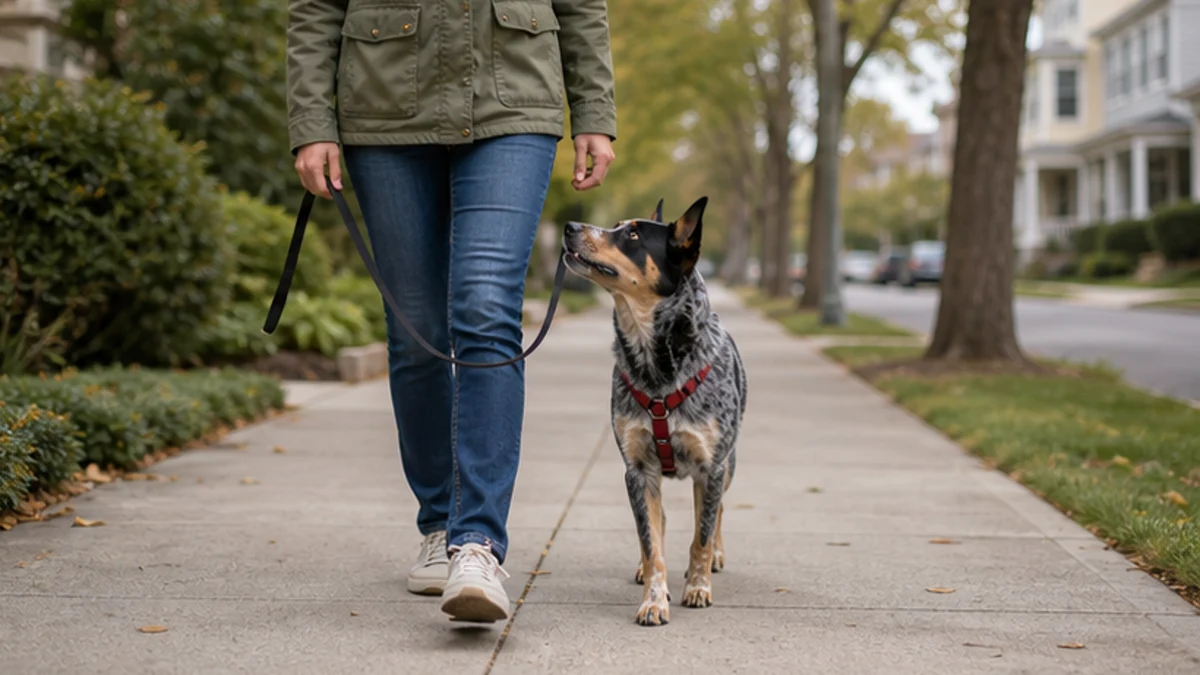
Choosing the right equipment
Equipment does not train the dog, but the right gear protects his neck and sets you both up to succeed. The wrong gear can make pulling worse.
- A front-clip harness. A harness with the ring on the chest steers the dog back toward you when he pulls, taking the power out of the lunge. It is kind and effective for most pullers.
- A back-clip harness. Comfortable and fine for trained dogs, but a strong puller can still forge ahead; it offers less steering help.
- A flat collar. Fine for dogs who walk loosely, but a constant puller can damage his trachea and neck. Avoid tight choke, prong, or shock collars; these use pain or fear, can injure, and risk turning anxiety into aggression. PawPals does not recommend them.
- A standard six-foot leash. Long enough for sniffing, short enough for control. Retractable leashes teach pulling and give poor control; skip them for training.
- A treat pouch. Instant rewards are the engine of loose-leash training.
Fit matters: a harness should be snug but not tight, with no rubbing at the armpits. Let the dog wear it briefly indoors before expecting a calm walk.
The stop-go method
This is the core exercise, and it is beautifully simple. The rule: forward motion only happens when the leash is slack.
- Start walking. The instant the leash goes tight, stop dead. Plant your feet.
- Wait. Do not yank or drag. Wait until the dog looks back, steps toward you, or the leash slackens, even a little.
- The moment it is loose, say “yes” and start walking again.
- Repeat, every time, on every walk. Tension means stop; slack means go.
At first you may stop every three steps, which feels silly. That is the lesson landing. The dog quickly learns “pulling freezes us; a loose leash moves us.” Within days the stops get longer apart. Keep your energy calm; jerking teaches him the leash is something to fight.
Teaching a loose-leash heel
Beyond just not pulling, you can teach a position. “Heel” means walking at your side with a loose leash.
- Reward the position. Treat at your left or right side, at the dog’s nose height, whenever he is in step and the leash is loose. He learns where you want him.
- Use a cue. Say “heel” as he moves into position, then reward. The word predicts the spot.
- Change pace. Speed up and slow down; reward him for staying with you. A dog who watches your speed is a dog who is not charging ahead.
- Turn often. Random changes of direction keep his attention on you, because you might go left at any moment. A dog watching you cannot pull you to the bush.
- Release to sniff. Walks are for dogs; allow a “go sniff” freedom period on a long slack so the outing is not all work. Balance makes training stick.
Rewarding the loose leash in real time
Timing is what makes this work. The reward must land while the leash is loose, so the dog connects slack with good things.
- Mark the slack. A calm “yes” the moment the leash loosens tells him exactly what earned it.
- High-value treats at first. Chicken or cheese beats kibble while he learns. Fade to praise and occasional treats later.
- Reward check-ins. When he glances up at you mid-walk, reward. A dog who checks in is a dog not pulling.
- Catch him being good. Most owners only react to pulling. Also react to the quiet, loose moments; that is what you want more of.
Managing the environment while training
You cannot train a behavior you keep triggering. Set the dog up to win.
- Quiet start. Begin the walk on a calm street or empty lot, not a busy park full of triggers.
- Increase challenge slowly. Move to busier areas only as he stays loose in calm ones.
- Use distance. If a squirrel or dog sets him off, cross the street or add space before he hits threshold.
- Practice at home first. Loose-leash walking in the living room, then the driveway, builds the skill before the real world tests it.
- Keep walks frequent and short. A focused ten-minute training walk beats a resentful hour of dragging.
Consistency is the whole game
The method fails only when it is applied on and off. If Monday you stop on tension but Tuesday you let him pull to the park, he learns pulling sometimes works, which is the strongest reward of all. Everyone who walks the dog must use the same rule: slack moves, tension stops.
- Family agreement. Write the rule on the fridge so all walkers comply.
- Same gear every time. The front-clip harness becomes the “training walk” signal.
- Short, daily reps. Five to ten minutes of real practice daily beats one long weekend session.
- Patience through relapses. A stimulating day will bring pulling back; reset and continue. The trend, not one walk, is what matters.
When to get help
Most pulling improves with this plan in a few weeks. Seek a reward-based trainer if:
- The dog is strong enough to injure you or drag you into danger.
- Pulling is paired with lunging or reactive barking at dogs or people; that may be fear or frustration needing a behavior plan.
- You feel unsure or tempted by aversive gear.
- Progress stalls despite consistent practice.
A good trainer coaches both the human and the dog and never relies on pain. Avoid anyone whose first tool is a prong or shock collar.
A calmer walk for both of you
Leash pulling is learned, and it can be unlearned. Fit a kind front-clip harness, apply stop-go on every walk without exception, reward the slack and the check-ins, teach a loose heel, and keep the rule consistent across the household. The first walks feel slow, but within weeks you will feel the leash go quiet — and a dog who walks with you, not against you, enjoys the outing far more. That calm connection is the real reward of the training.
PawPals provides educational content for new pet parents. We are not a veterinary practice, and this article is not a substitute for a veterinarian’s diagnosis or treatment. If your pet shows signs of illness, contact a licensed veterinarian.
Related reading
Teaching Sit, Stay, and Come
Use positive reinforcement and lure-reward training to teach sit, stay, and recall, with proofing steps and common mistakes to avoid.
Read the guidePuppy Biting and Nipping: Teaching Bite Inhibition
Understand why puppies mouth, use yelp-and-stop and toy redirection, manage overtired biting, and know normal vs concerning behavior.
Read the guideReading Your Dog's Body Language
Decode tail, ears, eyes, whale eye, play bows, stress yawns, and growls so you can respect your dog's boundaries and know when to back off.
Read the guideThis article is for education only and is not a substitute for a veterinarian's diagnosis. If your pet shows unusual symptoms, see a vet.