Cat Litter Box Setup and House-Training
Set up the right number and placement of litter boxes, pick a litter your cat likes, and solve accidents with patience.
An independent educational guide, not a veterinary consultation. Sources, illustrations & editorial standards
Most cats learn litter box use with almost no training at all. Kittens watch their mother, and the instinct to dig, squat, and cover is built in. When accidents happen, it is almost never “spite.” It is usually the box, the litter, the location, a medical issue, or stress. This guide helps you set up a litter station your cat will actually use, establish good habits, keep things clean, and troubleshoot when something goes wrong.
The golden rule: one box per cat, plus one
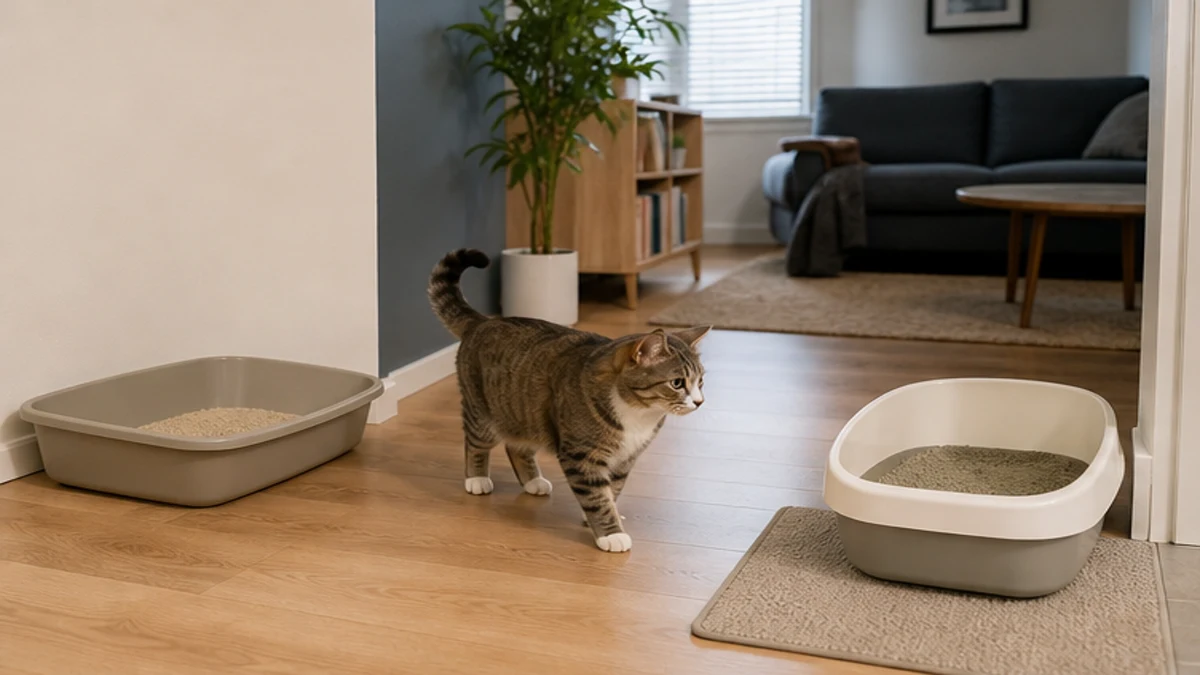
The most quoted rule in cat care is simple and worth following: provide one litter box per cat, plus one extra. So a one-cat home should have two boxes, and a two-cat home should have three. Why the extra? Cats are picky, and if the only box is occupied, dirty, or scary, they will choose the floor instead.
Spread the boxes out. Do not line them up in a row in the same corner — that reads as one big box to a cat, not three options. Put them in different rooms or at least different ends of a room. This also prevents one cat from “guarding” all the boxes and blocking another cat from using them.
- Single cat: two boxes, in two different locations.
- Two cats: three boxes, ideally not all in one room.
- Multi-level home: at least one box per floor so a kitten or senior cat never has to travel far.
Choose the right box and the right spot
Box type matters more than people expect. A box that feels safe and easy to enter will be used; an awkward one will be avoided.
- Size: Bigger is better. The box should be at least one and a half times the length of your cat, so an adult can turn around comfortably. Many commercial boxes are too small for large cats.
- High sides vs low entry: Covered boxes trap smells and can feel like a trap to nervous cats. Open boxes with medium sides suit most. For senior cats or kittens, use a box with a low front wall for easy step-in.
- Covered or uncovered: Covered boxes cut odor for humans but concentrate scent for cats. If you use one, scoop even more often. Many cats prefer open.
- Avoid liners and noisy textures if your cat seems to avoid the box; some cats hate the crinkle of plastic liners.
Placement is just as important as the box itself:
- Quiet and low-traffic. Not next to the washing machine, a loud vent, or a busy hallway.
- Easy to reach, day and night. A box behind a closed door your cat cannot open is useless.
- Away from food and water. Cats do not like to toilet where they eat. Keep boxes and bowls on opposite sides of the room at minimum.
- Good light. A dim box in a scary basement may be avoided. A night-light helps.
- Safe from other pets or kids who might ambush the cat mid-squat.
Pick a litter your cat accepts
There is no single best litter; there is only the litter your specific cat will use. The safest starting point is an unscented, fine-grained, clumping clay litter, because it most resembles the soft soil cats prefer and controls odor well. From there, you can experiment.
Common litter types:
- Clumping clay: Popular, easy to scoop, good odor control. Dust can bother some cats and humans.
- Non-clumping clay: Cheap, absorbs well, but you must change it fully often.
- Silica crystal: Low dust, long-lasting, but some cats dislike the texture and the smell.
- Natural or plant-based (pine, wheat, corn, paper): Biodegradable and low-dust, good for eco-minded homes, though odor control varies.
- Recycled paper pellets: Often used after surgery or for kittens who might eat clumping litter.
Tips that prevent refusal:
- Skip heavy perfumes. Scented litters can repel cats and irritate sensitive noses.
- Change brands slowly. Mix a little of the new litter into the old over a week rather than swapping overnight.
- Depth matters. Aim for about two to three inches. Too shallow and the cat cannot dig; too deep and it may be wasteful and kicked everywhere.
- Kittens under four weeks should use paper-based litter, because clumping clay can be dangerous if eaten.
Set up a cleaning routine
Cats are clean animals and will avoid a dirty box. A consistent cleaning schedule is the single biggest factor in preventing accidents.
- Scoop at least once daily, ideally twice. A quick morning and evening scoop takes two minutes.
- Top up litter after scooping so depth stays around two to three inches.
- Full wash every two to four weeks. Empty the box, wash with mild unscented soap and warm water, rinse well, dry, and refill. Avoid strong disinfectants or bleach smells that linger.
- Replace the box itself every six to twelve months, or sooner if it holds odor or has scratches that trap waste.
- Watch the litter level in multi-cat homes; boxes fill faster and need more frequent scooping.
A good rule: if you would not step barefoot into it, your cat will not either.
House-training a kitten or new cat
Most kittens arrive already trained by their mother. Your job is to make the right choice obvious.
- Show the box. On day one, place the kitten in the box after meals and naps, gently scratch the litter with a finger. Let them dig.
- Confine at first. For the first week, keep a kitten in a small room with the box, food, and bed. A small space teaches where the box is.
- Reward quietly. When the kitten uses the box, offer soft praise or a treat after they finish — not during, or you may interrupt them.
- Open the house gradually. Once they use the box reliably for several days, give access to one more room, then more.
- Keep a box in the original room for a while so they never have to hunt for one.
Adopted adult cats usually know the routine. Place them in the box on arrival, then watch for the first day to confirm they use it. If the previous home used a different litter, keep that litter for the first week, then transition slowly.
A sudden change in litter box habits — straining, blood, crying, or going outside the box for the first time — is often a medical signal, not a behavior choice. Urinary problems in cats can become serious within a day. Call your vet promptly rather than assuming stubbornness.
Troubleshooting accidents
When your cat goes outside the box, stay calm and play detective. Punishment does not work and can make the cat hide accidents.
- Check health first. Rule out infection, stones, pain, or constipation with a vet visit before assuming behavior.
- Re-examine the box. Too small, too dirty, wrong litter, wrong spot, or guarded by another pet?
- Clean accidents properly. Use an enzymatic cleaner made for pet urine. Regular cleaners leave scent that draws the cat back. Never use ammonia — it smells like urine to a cat.
- Move the box to the accident spot. If the cat keeps choosing one corner, put a box there temporarily, then slowly slide it toward the preferred location over days.
- Reduce stress. New pets, moves, guests, or schedule changes can trigger stress peeing. Add vertical space, hiding spots, and predictable routines. Pheromone diffusers may help some cats.
- Separate the bullies. In multi-cat homes, make sure no cat blocks access. More boxes in more rooms solves many cases.
- Litter box aversion vs territory marking. Spraying on vertical surfaces (walls, furniture) is marking, often stress-related, and needs a different plan than box avoidance. A vet or behaviorist can tell the difference.
When to see the vet
Some signs mean stop troubleshooting at home and call the clinic:
- Straining with little or no urine, or frequent trips with nothing produced.
- Blood in urine or stool.
- Crying or signs of pain in the box.
- Suddenly using the box far more or far less than usual.
- Accidents paired with lethargy, vomiting, or not eating.
- Any male cat straining to urinate — this can be a blockage and is an emergency.
Cats hide illness well, so a change in bathroom habits is one of the clearest early warnings you get. Treat it as information, not misbehavior.
With the right number of clean boxes in good locations, a litter your cat accepts, and a calm introduction, most cats stay reliably trained for life. When accidents do appear, start with health and environment before behavior, clean with the right products, and lean on your vet when in doubt. A patient setup now saves years of frustration.
This article is for education only and is not a substitute for a veterinarian’s diagnosis. If your pet shows unusual symptoms, see a vet.
Related reading
Teaching Sit, Stay, and Come
Use positive reinforcement and lure-reward training to teach sit, stay, and recall, with proofing steps and common mistakes to avoid.
Read the guidePuppy Biting and Nipping: Teaching Bite Inhibition
Understand why puppies mouth, use yelp-and-stop and toy redirection, manage overtired biting, and know normal vs concerning behavior.
Read the guideReading Your Dog's Body Language
Decode tail, ears, eyes, whale eye, play bows, stress yawns, and growls so you can respect your dog's boundaries and know when to back off.
Read the guideThis article is for education only and is not a substitute for a veterinarian's diagnosis. If your pet shows unusual symptoms, see a vet.