Understanding and Easing Separation Anxiety
Tell mild worry from true separation anxiety, use departure desensitization and enrichment, and know when a behaviorist or vet should step in.
An independent educational guide, not a veterinary consultation. Sources, illustrations & editorial standards
Few things are harder than a dog who falls apart the moment you leave. The scratching at the door, the howling, the chewed frame, the accident on the floor you just cleaned — it is upsetting for you and genuinely distressing for the dog. Separation anxiety is real, it is not spite, and it is treatable for most dogs with a patient plan. The first step is to understand what you are actually seeing, because “my dog hates being alone” can mean very different things, and the fix depends on which one it is.
What separation anxiety really is
Separation anxiety is a panic response to being apart from the person or people the dog bonds with. It is not a training failure and not a dog being “bad.” The dog is overwhelmed by fear, much like a person with a panic attack. He is not thinking through his actions; his body has taken over.
It often starts after a change: a move, a new work schedule, a long holiday together followed by absence, the loss of a companion pet, or a history of being rehomed. Puppies and rescue dogs are common cases, but any dog can develop it. Knowing the cause helps you adjust, though you do not need the cause to start helping.
Mild worry versus true anxiety
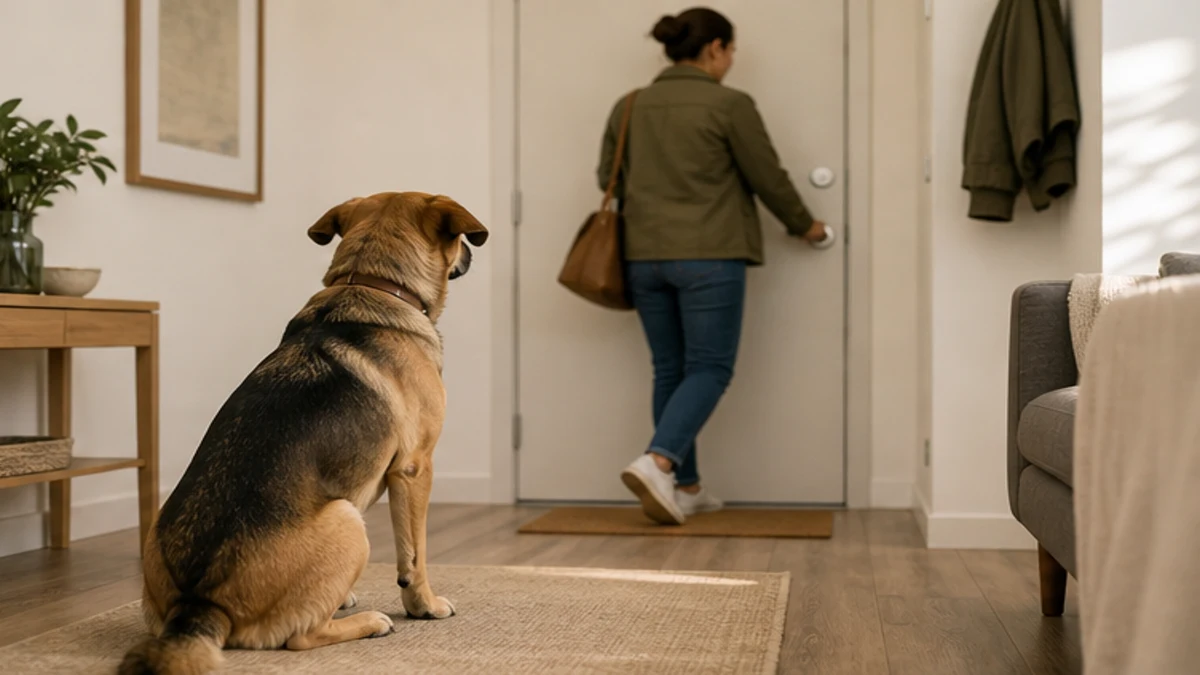
Not every dog who dislikes alone time has clinical separation anxiety. Telling the levels apart keeps your plan realistic.
Signs of mild discomfort include:
- Waiting by the window when you leave.
- A little pacing or a single bark at the start.
- Settling within a few minutes and resting.
- Mild restlessness but no destruction.
Signs of more serious separation anxiety include:
- Howling, barking, or whining that lasts most of the absence.
- Destruction aimed at exits: doors, windows, crates.
- Drooling, trembling, or vomiting from stress.
- Attempts to escape that injure paws or nails.
- House soiling despite being trained, only when alone.
- Refusal to eat or drink the whole time you are gone.
If the second list describes your dog, you are likely dealing with true anxiety, and the gentle steps below still help but may need professional support alongside them.
Build a calm departure routine
Dogs read our leaving rituals like a script. Keys jangle, shoes go on, coat grabs, and the dog’s heart starts racing before we reach the door. The aim is to make those cues boring.
- Practice the ritual without leaving. Pick up keys, put on shoes, set them down. Repeat many times a day with no departure. The cues stop predicting your exit.
- Keep goodbyes flat. A long, emotional farewell tells the dog this is a big event. A calm “be right back” and a step out works better than a hug and tears.
- Keep returns flat too. Ignore the dog for a minute or two when you get home, then greet quietly. Excited reunions reward the anxiety around your return.
- A special item only when alone. A frozen food toy, a chew, or a scented shirt appears only at departure, so alone time gains a good association.
Desensitize to departures
This is the core exercise, and it is done in tiny steps over many sessions. You teach the dog that your movements near the door mean nothing and that you always come back.
- Stand up, take one step toward the door, then sit down. Repeat until the dog does not react.
- Walk to the door, touch the handle, return. No opening.
- Open the door, step out, step in. Close it.
- Step outside for two seconds, return. No greeting.
- Build to ten seconds, thirty, one minute, five minutes, twenty.
Go at the dog’s pace. If he shows stress at any step, you moved too far; drop back. The whole point is that he stays under his panic threshold the entire time. This can take days or weeks, and that is normal. Short, frequent practices beat one long one.
Enrichment that lowers the load
A dog with a tired brain and body handles alone time better. Enrichment is not a cure by itself, but it lowers the fuel for anxiety.
- A morning sniff walk. Letting a dog sniff on a walk tires the mind more than a fast march tires the legs.
- Food puzzles and lick mats. These occupy the mouth and brain for twenty to forty minutes, often covering the worst early alone time.
- A window view or calm music. Some dogs settle with a view of the yard or soft radio noise that masks outside sounds.
- Rotate toys. New-to-him toys hold attention longer than the same ones daily.
- Company options. A midday dog walker or a neighbor visit breaks long stretches for a dog still in training.
Manage the environment
While you train, reduce the dog’s chance to practice panic. Practicing the distress deepens it.
- Use a crate or safe room only if the dog is calm in it; crating a panicking dog can cause injury.
- A camera lets you watch what actually happens, so you train the real behavior, not your guess.
- For mild cases, a baby gate in a familiar room with his bed and a chew may be enough.
- Avoid long absences during the worst weeks; arrange help so alone time stays short.
When it is a behaviorist or vet matter
Some cases need more than a home plan, and knowing when to call in help is part of responsible care.
- Severe distress. Destruction, self-injury, or vomiting means the dog is suffering. A certified behavior consultant or veterinary behaviorist should design the plan.
- No progress in weeks. If gentle steps stall, a professional can spot what you are missing.
- Medication is a vet decision. For moderate to severe anxiety, vets sometimes prescribe medication that lowers the fear enough for training to work. This is a medical choice made with your veterinarian, never something to try on your own or from the internet. Behavior modification and medication often work best together under guidance.
- Sudden onset. A dog who was fine alone and suddenly panics may have a medical cause — pain, thyroid changes, or cognitive decline in older dogs. A vet check comes first.
A qualified trainer or behaviorist uses desensitization and counter-conditioning, the same ideas here but measured precisely. Choose someone reward-based; punishment worsens anxiety.
What not to do
A few common reactions make separation anxiety worse.
- Punishing the mess or damage. The dog cannot connect the scolding to the hours-earlier panic and only learns you are scary when you return.
- Crating a panicking dog. Escape attempts can break teeth and nails.
- Getting another dog to fix it. A second dog rarely cures anxiety and can double your problems.
- Long absences during training. Every solo panic rehearsal sets the habit deeper.
A patient, kind path forward
Easing separation anxiety is a slow project measured in small wins: a dog who lies down instead of pacing, who eats his toy, who stays quiet for ten minutes, then an hour. Celebrate those steps. Keep departures boring, build the desensitization ladder, enrich the days, and bring in professional help when the case is severe or stuck. Your dog is not giving you a hard time; he is having a hard time, and with your steady plan he can learn that being alone is safe and you always come back.
PawPals provides educational content for new pet parents. We are not a veterinary practice, and this article is not a substitute for a veterinarian’s diagnosis or treatment. If your pet shows signs of illness, contact a licensed veterinarian.
Related reading
Teaching Sit, Stay, and Come
Use positive reinforcement and lure-reward training to teach sit, stay, and recall, with proofing steps and common mistakes to avoid.
Read the guidePuppy Biting and Nipping: Teaching Bite Inhibition
Understand why puppies mouth, use yelp-and-stop and toy redirection, manage overtired biting, and know normal vs concerning behavior.
Read the guideReading Your Dog's Body Language
Decode tail, ears, eyes, whale eye, play bows, stress yawns, and growls so you can respect your dog's boundaries and know when to back off.
Read the guideThis article is for education only and is not a substitute for a veterinarian's diagnosis. If your pet shows unusual symptoms, see a vet.