Pet Gear Worth Buying First on a Tight Budget
A priority list for new dog and cat owners: what protects safety and daily care first, and what can wait until later.
An independent educational guide, not a veterinary consultation. Sources, illustrations & editorial standards
Pet shopping can make beginners feel behind before the pet even arrives. Shelves are full of beds, cameras, toys, fountains, grooming gadgets, supplements, and premium accessories. Some are useful. Many can wait. A tight budget should go first toward safety, hygiene, feeding, identification, and vet readiness.
Buy safety before style
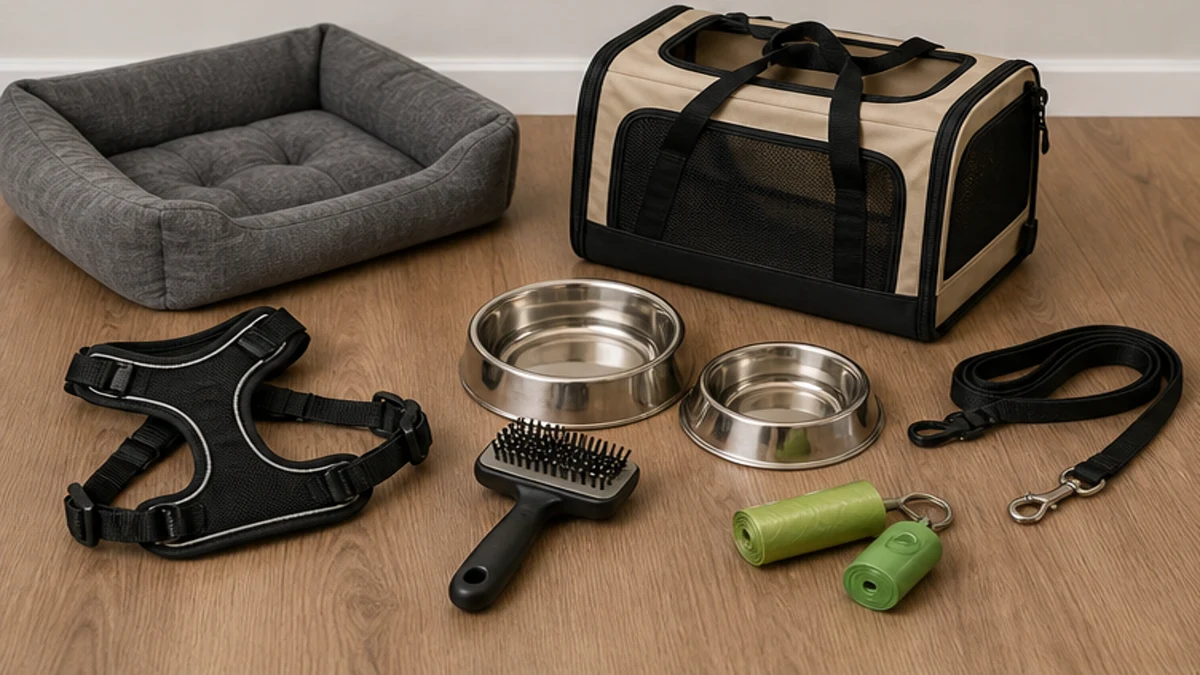
For dogs, a secure leash and a well-fitting collar or harness come before cute clothing or novelty toys. Add an ID tag with a current phone number. If your dog pulls hard, choose a front-clip harness that spreads pressure across the chest rather than the throat.
For cats, a sturdy carrier is essential even for indoor cats. Emergencies and vet visits happen, and a weak carrier can fail at the worst time. Choose one that closes securely, has ventilation, and is easy to clean. Top-loading carriers often make vet handling calmer.
For both, prioritize safe containment: baby gates, a crate, a pen, or a separate room depending on the pet. Preventing accidents is cheaper than repairing damage or treating an injury.
Hygiene basics matter every day
Cats need litter boxes that are big enough and easy to access. A covered designer box is not always better; many cats prefer an open, clean box in a quiet place. Start with unscented litter unless you know the cat already accepts something else.
Dogs need waste bags, cleaning supplies for accidents, and washable bedding. Skip heavily perfumed cleaners and use an enzymatic cleaner for urine spots so the smell does not invite repeat accidents.
Feeding gear can stay simple
Stainless steel or ceramic bowls are usually enough. They are easy to wash and do not hold odor like scratched plastic. For cats, wide shallow bowls can reduce whisker discomfort. For fast-eating dogs, a slow feeder or scatter feeding can help, but you can start with a clean towel or puzzle setup before buying a specialized bowl.
Measure food with a scale if you already own one. If not, use the same level scoop every time and consider a scale later. Consistency matters more than expensive containers.
What can wait
Pet cameras, automatic feeders, fountains, fancy beds, large toy bundles, premium grooming kits, and subscription boxes can wait until you know the pet’s habits. A cat may ignore the bed you chose and prefer a cardboard box. A dog may love chewing but ignore plush toys. Buy based on observed behavior, not guesswork.
Save room in the budget for the first vet visit, vaccines, parasite prevention, microchip registration, and emergency transport. Health readiness is gear too, even if it does not look like a product.
The first-month priority list
Start with identification, containment, food and water bowls, appropriate food, litter or waste supplies, a bed or washable resting spot, safe chew or scratch outlets, grooming basics, and a carrier or leash setup. Add enrichment and convenience items after the pet tells you what they actually use.
Good gear solves a real daily problem. If an item does not improve safety, hygiene, feeding, comfort, or training, it is probably optional in the first month.
This article is for education only and is not a substitute for a veterinarian’s diagnosis. If your pet shows unusual symptoms, see a vet.
Related reading
Choosing a Carrier for Travel and Vet Visits
A practical, non-sponsored guide to hard vs soft carriers, sizing, ventilation, top-loading designs, acclimation, car safety, and airline rules.
Read the guideCat Trees and Scratching Posts Explained
A practical, non-sponsored guide to why cats need vertical space, choosing height and stability, sisal vs carpet, placement, and multi-cat sizing.
Read the guideChoosing the Right Cat Litter and Litter Box
A practical, non-sponsored guide to litter types, box styles, the n+1 rule, placement, and daily cleaning routines.
Read the guideThis article is for education only and is not a substitute for a veterinarian's diagnosis. If your pet shows unusual symptoms, see a vet.