Choosing a Carrier for Travel and Vet Visits
A practical, non-sponsored guide to hard vs soft carriers, sizing, ventilation, top-loading designs, acclimation, car safety, and airline rules.
An independent educational guide, not a veterinary consultation. Sources, illustrations & editorial standards
Every pet needs a carrier, even if you never travel. At some point your cat or small dog will need a vet visit, and carrying a struggling animal loose in your arms is stressful for everyone and unsafe for the pet. A good carrier turns a scary errand into a manageable one. This guide covers hard versus soft carriers, how to size them, ventilation, the magic of top-loading designs, how to acclimate your pet, car safety, and a note on airline rules.
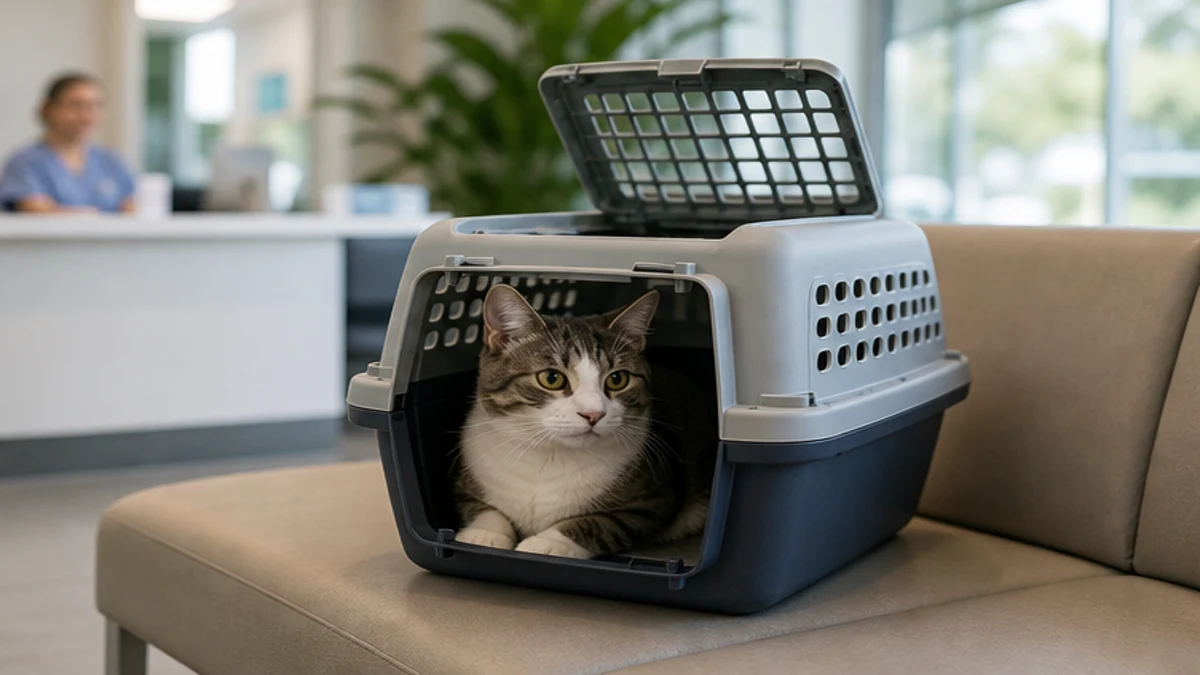
Hard vs soft carriers
Both have a place; the right one depends on your pet and how you travel.
Hard-sided carriers
Hard plastic carriers are the durable standard, especially for cats and for car travel. They are easy to clean if there is an accident, protect the pet if dropped or bumped, and stack neatly. Most veterinary clinics prefer hard carriers because they are secure and easy to place on an exam table. The downside is weight and bulk, and a hard shell can feel less cozy.
Soft-sided carriers
Soft carriers are light, collapsible, and often more comfortable, with mesh on several sides for airflow and visibility. They are the usual choice for in-cabin airline travel and for toting a small pet through a city. The limits: they are easier to chew through, harder to deep-clean, and offer less protection in a crash or drop. A chewer should not be left alone in a soft carrier.
For most households, a hard carrier kept permanently in a closet for vet trips, plus a soft one for travel if needed, covers all bases.
Sizing the carrier
A carrier should let the pet stand, turn around, and lie down stretched out — but not be so huge the animal slides around. For cats and small dogs, “stand and turn” is the test. A carrier that is too large actually increases anxiety because the pet has no walls to brace against, and it shifts more in the car.
A practical measure: length should exceed the pet from nose to tail base by a few inches, and height should clear the pet’s sitting ears. If you are between sizes for a growing puppy, size up but add a non-slip mat so the pup feels secure.
Ventilation and visibility
Good airflow prevents overheating, which is a real danger in a closed carrier on a warm day. Look for mesh or slatted openings on at least two, ideally three, sides. At the same time, some pets panic if they can see everything and everyone; a carrier with a partial cover or a towel draped over it can calm a nervous cat. Balance airflow with a sense of enclosure.
Avoid carriers with a single tiny front grate and no side ventilation. And never leave a pet in a carrier in a hot car or in direct sun — heat builds fast.
The case for top-loading
Many carriers open from the top as well as the front. This is a quiet game-changer at the vet. A cat that presses itself to the back of the carrier can be lifted out gently from above instead of being dragged out the front, which spooks it. Top-loading also makes placing a reluctant pet inside easier at home. If you have a nervous cat, prioritize a carrier with a top zip or hatch.
Acclimating your pet to the carrier
The biggest mistake is bringing the carrier out only on vet day, when it already smells of fear and the clinic. Instead, make it a normal object at home.
- Leave the carrier out with the door open, lined with a soft mat, as part of the furniture.
- Toss treats or kibble inside so the pet chooses to enter.
- Add a worn t-shirt with your scent, or a familiar blanket, so it smells like home.
- Feed occasional meals near or inside the carrier.
- Practice short, happy sessions: close the door for a minute, open it, reward.
- For cats, a pheromone spray made for carriers, used ahead of time, can take the edge off — ask your vet about options.
A pet that naps in its carrier at home will tolerate a trip far better than one that sees the carrier as a trap.
Car safety
Loose pets in cars are a hazard: they can climb under the pedals, become a projectile in a sudden stop, or escape into traffic at a rest stop. Options for safer travel:
- A hard carrier secured with a seatbelt or anchored in the footwell, so it cannot slide.
- A crash-tested harness clipped to the seatbelt for dogs too large for a carrier.
- Never let a pet ride in the front seat with airbags, and never in the open bed of a truck.
- Cover the carrier with a light towel on the road to reduce visual stress, leaving airflow clear.
Security cuts both ways: a restrained pet is safer, and you are not distracted while driving.
Airline and public-transit rules
If you will fly, do not assume any carrier qualifies. Each airline sets its own size and style rules for in-cabin pets, and they change, so always check the specific airline’s current pet policy before you book. Soft-sided carriers that fit under the seat are the norm for cabin travel; hard carriers usually must go in cargo, which is a very different and riskier proposition. For trains or buses, rules vary just as much — verify before you travel rather than at the gate.
We will not name specific airlines or carriers’ approvals here because policies shift; the safe move is to read the current rule for your exact flight.
What to keep ready in the carrier
Make the carrier a go-bag, not an empty box. Keep a familiar smelly blanket inside so it always smells like home, plus a couple of high-value treats for the vet’s scale and a few puppy pads or an absorbent liner for accidents. A small towel to drape over the top calms a nervous cat on the road. Rotate the blanket through the wash occasionally so it stays clean but still carries scent — a freshly laundered, scent-free blanket loses its comforting effect. Having these ready means a sudden illness trip is one less thing to scramble about.
Cleaning and upkeep
Carriers get dirty, especially after a sick or stressed pet. Hard carriers wash with mild soap and water and dry fully. Soft carriers often have removable, washable pads; wipe the shell and air it out. Keep a spare absorbent pad or puppy pad inside for accidents, and sanitize after any illness once your vet clears it.
A sensible choice
For most new owners, one hard, top-loading carrier sized for “stand and turn,” kept out at home and treated as friendly furniture, is the right first buy. Add a soft carrier later only if you travel often. Above all, acclimate early — the carrier that feels like a safe den at home is the one that gets your pet to the vet calmly when it counts.
PawPals provides educational content for new pet parents. We are not a veterinary practice, and this article is not a substitute for a veterinarian’s diagnosis or treatment. If your pet shows signs of illness, contact a licensed veterinarian.
Related reading
Pet Gear Worth Buying First on a Tight Budget
A priority list for new dog and cat owners: what protects safety and daily care first, and what can wait until later.
Read the guideCat Trees and Scratching Posts Explained
A practical, non-sponsored guide to why cats need vertical space, choosing height and stability, sisal vs carpet, placement, and multi-cat sizing.
Read the guideChoosing the Right Cat Litter and Litter Box
A practical, non-sponsored guide to litter types, box styles, the n+1 rule, placement, and daily cleaning routines.
Read the guideThis article is for education only and is not a substitute for a veterinarian's diagnosis. If your pet shows unusual symptoms, see a vet.