Choosing the Right Cat Litter and Litter Box
A practical, non-sponsored guide to litter types, box styles, the n+1 rule, placement, and daily cleaning routines.
An independent educational guide, not a veterinary consultation. Sources, illustrations & editorial standards
Bringing a cat home is exciting, but the humble litter box is one of the most important purchases you will make. Get it right and your cat will quietly handle their own business for years. Get it wrong and you may be dealing with accidents, bad smells, and a stressed cat. This guide walks through litter types, box styles, how many boxes you actually need, where to put them, how to control odor, how to switch litters safely, and how to clean without losing your weekend.
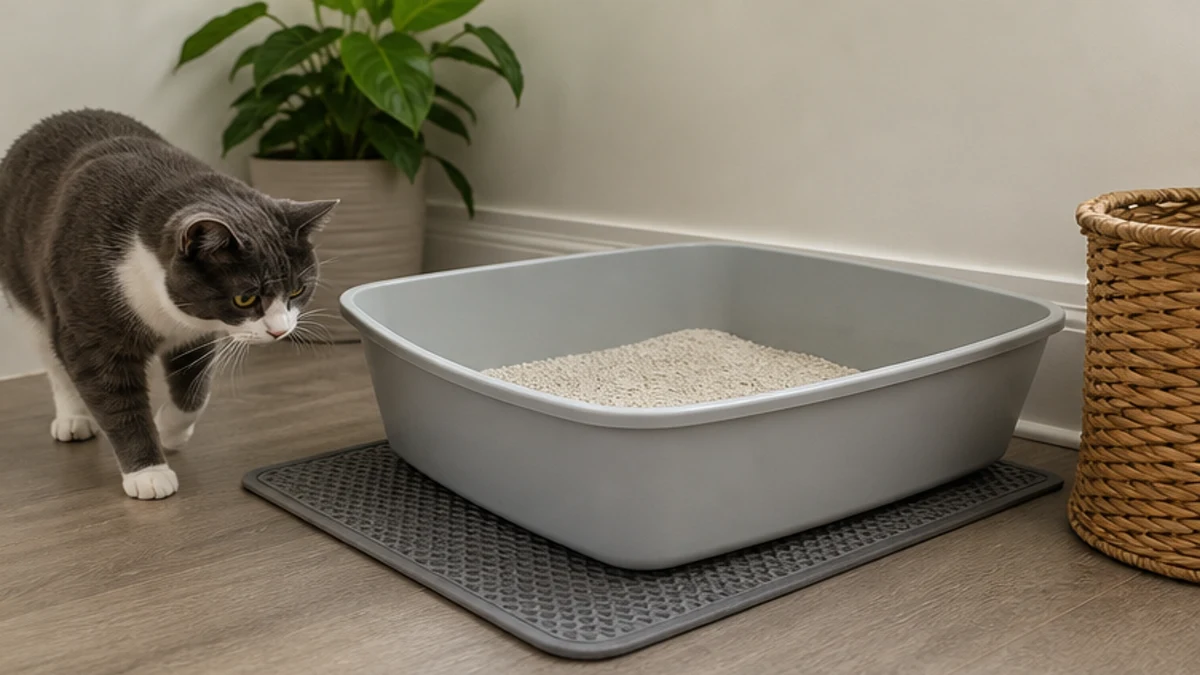
Start with your cat’s point of view
Cats are fastidious by nature. In the wild they bury waste to hide their scent from predators and rivals, and that instinct is still strong in your living room. A box that is dirty, smelly, cramped, or placed next to a loud washing machine can feel unsafe to a cat. When a cat avoids the box, it is almost never “out of spite” — it is a signal that something about the setup is uncomfortable. Keep this in mind as you choose products: the goal is to match the cat, not to win an argument.
Types of cat litter
There is no single “best” litter. The right choice balances what your cat will actually use, what fits your home, and what you can keep clean. Here are the main families.
Clay and clumping litter
Clay litter is the classic option and the most familiar to most cat owners. It is made from bentonite or similar minerals that absorb liquid and form solid clumps when your cat urinates. You scoop the clumps daily and top up the box.
The big advantages are texture and reliability. Most cats accept clay readily because it feels like natural earth under their paws, and the clumps are easy to remove, which keeps the box fresher between full changes. Many clumping formulas also do a decent job of trapping odor.
The downsides are real, though. Clay is heavy to carry and cannot be flushed. Lower-quality clay can throw up noticeable dust when poured, which is unpleasant for you and can bother cats with sensitive respiratory systems. If you go with clay, look for a low-dust or “99% dust-free” label and a tight-clumping formula.
Silica gel (crystal) litter
Silica litter is made of small beads or crystals that absorb urine and trap odor inside the beads. It does not clump; instead, moisture evaporates and leaves the solid waste for you to scoop. A box of silica can often go a week or more between changes for a single cat.
Cats that like a dry, non-clumpy feel often accept silica well, and the odor control is genuinely impressive. The trade-offs are cost (it is usually pricier per month) and the fact that some cats dislike the unusual texture or the occasional clicking sound of the beads. Silica must never be flushed, and the small crystals should be kept away from young children who might mistake them for something edible.
Tofu and plant-based litter
Tofu litter is made from soybean residue and other plant fibers. It is soft, low in dust, and — importantly — biodegradable and flushable in small amounts (always check your local plumbing rules first). It clumps like clay but breaks down more gently, and many owners like the light, clean scent.
The main complaints are soft clumps that can crumble in very humid weather, and a higher price than basic clay. Some cats also reject the different paw feel at first. A common compromise is a mixed litter: a base of clay with a scoop of tofu on top to cut dust while keeping the familiar texture.
Pine and wood litters
Pine litter comes as pellets or as softer processed wood. It works differently from clumping litters: when urine hits the pellets, they absorb it and turn to sawdust, which falls to the bottom of a sifter box. The natural pine scent masks odor without perfumes, and the material is compostable.
The catch is that pine feels nothing like traditional litter, so transitions need to be slow, and the sifting system means you are buying a specific kind of box. Some owners love it for low dust and eco-friendliness; others find the pellet texture a hard sell for fussy cats.
Quick comparison
- Clay/clumping: familiar, cheap, good clumps; heavy, dusty, not flushable.
- Silica: superb odor control, low maintenance; costlier, odd texture for some.
- Tofu/plant: low dust, flushable, gentle; softer clumps, pricier.
- Pine/wood: natural scent, compostable; needs a sifter box, slow transition.
Choosing a litter box
The litter is only half the story. The box itself matters just as much.
Open vs covered
An open box is the safest default. It is easy to clean, gives the cat a clear sightline (cats like to see their surroundings while they are vulnerable), and tends to vent better so smells do not build up. Most cats prefer open boxes.
A covered box can reduce litter scatter and contain odor near the box, which some owners like. But covers also trap ammonia smells inside, can feel cramped, and may spook a cat that hates enclosed spaces or a swinging door flap. If you use a covered box, clean it more often and make sure it is large enough.
Top-entry boxes
Top-entry boxes have a lid with a hole; the cat jumps in from above. They are excellent at stopping dogs or toddlers from raiding the box and at keeping litter contained. The drawback is that senior cats, kittens, or cats with arthritis may struggle to climb in. Skip these for older or mobility-limited cats.
Self-cleaning boxes
Automatic boxes rake waste into a sealed compartment after each use. They cut down on scooping and can be a lifesaver for busy households. They are, however, expensive, need power, and have more parts that can break or scare a cat with noise and motion. Introduce them slowly and keep a standard box available alongside until your cat clearly prefers the automatic one.
Size matters more than style
Whatever style you pick, size is the most common mistake. A good box should be at least 1.5 times the length of your cat from nose to tail base, with sides low enough for easy entry but high enough to contain litter. Many commercial boxes are too small for large cats — when in doubt, use a storage tub with a cut-down entry.
The n+1 rule
Here is the single most useful rule in cat care: provide one litter box per cat, plus one extra. Two cats need three boxes; one cat ideally has two. Cats are territorial and private, and having options prevents “I didn’t want to use the other cat’s box” standoffs that lead to accidents. Spread the boxes around the home rather than lining them up in one spot — multiple boxes in one corner count as one box in the cat’s mind.
Where to put the litter box
Placement can make or break litter-box success.
- Quiet and low-traffic: avoid hallways and busy doorways.
- Away from food and water: cats will not eliminate where they eat.
- Easy access: not behind a closed door or down a flight of stairs a senior cat dreads.
- One per floor for multi-level homes.
- Avoid loud appliances: a box next to a buzzing fridge or washer feels unsafe.
Odor control without the gimmicks
You do not need heavily perfumed litter or scented deodorizers, which can irritate cats and discourage use. Real odor control comes from scooping daily, doing a full wash of the box weekly, using enough litter (about 5–7 cm / 2–3 inches deep), and ensuring good ventilation. If smell persists despite daily scooping, revisit box number and placement before reaching for fragrances.
How to transition to a new litter
Cats hate sudden changes under their paws. When switching litters, mix about 25% of the new litter with 75% of the old for a few days, then 50/50, then 75/25, then fully new over one to two weeks. If your cat starts avoiding the box, slow down or pause the mix. Patience here prevents accidents.
A realistic cleaning schedule
- Daily: scoop solids and clumps; top up litter as needed.
- Weekly: empty the box, wash with mild unscented soap and warm water, dry fully, refill.
- Monthly-ish: replace the box itself if it is scratched and holding odor (plastic boxes wear out).
- Self-cleaning: empty the waste drawer per the maker’s guidance; still do a periodic deep clean.
Common problems and fixes
My cat refuses the box
Rule out medical causes first — a vet check is wise if a previously box-trained cat suddenly stops. Then review the basics: is it clean enough, big enough, private enough, and away from food? Try an extra open box in a new spot. Use an enzyme cleaner on accident spots to remove scent markers that invite repeat visits.
Litter tracking everywhere
Tracking is normal but manageable. Use a litter mat at the entrance, switch to a larger-pellet or lower-tracking litter, keep the depth moderate, and consider a top-entry or high-sided box. Bare feet also spread less than socks.
Dust clouds
If pouring kicks up dust, switch to a low-dust or plant-based litter, pour slowly, and store the bag sealed. Persistent dust can also signal it is time to change brands.
A note on kitten safety
Clumping litter is not recommended for kittens under about eight weeks, who may ingest it while grooming and risk intestinal blockage. Use a non-clumping, low-dust option for very young kittens and switch to clumping once they are older and litter-trained.
PawPals provides educational content for new pet parents. We are not a veterinary practice and this article is not a substitute for a veterinarian’s diagnosis or treatment. If your pet shows signs of illness, contact a licensed veterinarian.
Related reading
Pet Gear Worth Buying First on a Tight Budget
A priority list for new dog and cat owners: what protects safety and daily care first, and what can wait until later.
Read the guideChoosing a Carrier for Travel and Vet Visits
A practical, non-sponsored guide to hard vs soft carriers, sizing, ventilation, top-loading designs, acclimation, car safety, and airline rules.
Read the guideCat Trees and Scratching Posts Explained
A practical, non-sponsored guide to why cats need vertical space, choosing height and stability, sisal vs carpet, placement, and multi-cat sizing.
Read the guideThis article is for education only and is not a substitute for a veterinarian's diagnosis. If your pet shows unusual symptoms, see a vet.