How to Pick a Comfortable Dog or Cat Bed
A practical, non-sponsored guide to bed types, sizing, washable covers, age-specific needs, placement, and helping your pet love the new bed.
An independent educational guide, not a veterinary consultation. Sources, illustrations & editorial standards
A good bed is where your pet spends most of its day. Dogs sleep roughly twelve to fourteen hours as adults, and cats can sleep even more, so the bed is not a luxury — it is core equipment for health and comfort. Yet many owners buy a bed that is the wrong size, impossible to wash, or shaped for a dog that sleeps nothing like theirs. This guide walks through bed types, how to size them, why washable covers matter, what seniors and kittens need, where to put the bed, and how to help a hesitant pet actually use it.
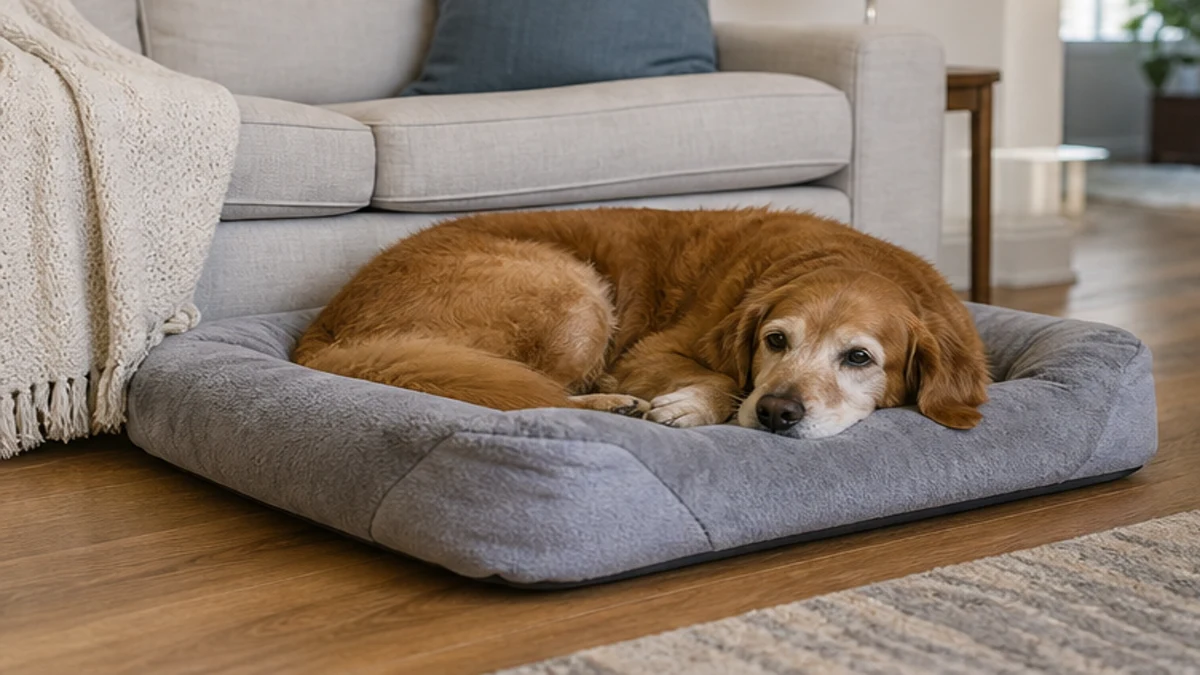
Match the bed to the sleeping style
Pets sleep in distinct postures, and the right bed supports the way your animal actually rests.
Donut and bolster beds
These have a raised rim around part or all of the edge. The bolster gives a place to rest the head and a sense of enclosure that many anxious or small pets love. Cats in particular often curl into a donut bed like a croissant. If your pet sleeps curled in a ball, a bolster or donut is a strong match.
Flat mats and pads
A simple cushioned mat suits pets that sprawl on their side or stretch out fully. They are easy to move from room to room, slide under a crate, or toss in the car. For a pet that follows the sun patch around the house, a couple of washable mats may beat one fancy bed.
Orthopedic beds
Orthopedic beds use memory foam or high-density foam to cushion joints and distribute weight. They are the right call for senior dogs, large breeds prone to joint strain, and any pet with arthritis or mobility limits. A thin cushion on a hard floor does little for an old dog’s hips; a proper orthopedic bed can meaningfully improve rest.
Cave and covered beds
Some cats and small dogs want a hideaway. A cave bed offers a dark, enclosed pod that appeals to animals that crave security. The trade-off is that a pet who runs hot or dislikes confinement will ignore it, so read your individual animal before buying.
Heating and cooling options
Self-warming beds reflect body heat and suit short-haired or senior pets in cool homes. Cooling mats help thick-coated dogs in summer. These are nice-to-haves, not essentials, and should never get so warm they risk overheating.
Sizing it right
A bed that is too small forces a pet to hang off the edge, which defeats the purpose. A reliable rule: measure your pet from nose to tail base while stretched out, then add a hand’s width on each side. The pet should be able to fully extend without touching the rim.
For cats, remember they often like to stretch diagonally, so a bed that looks generous is usually right. For dogs, bigger breeds need proportionally thicker foam — a Yorkshire terrier and a Great Dane have very different pressure needs even at the same labeled “large.”
Washable covers are non-negotiable
Beds get dirty. They collect fur, dander, drool, the occasional accident, and the general dust of a home. A bed with a removable, machine-washable cover will stay fresh for years; a bed you cannot wash becomes a smelly lump you quietly throw away.
Look for:
- A zipper cover you can pull off without a wrestling match.
- Fabric that survives repeated washing without pilling into fuzz.
- A waterproof or wipeable inner liner that protects the foam from accidents.
- Replacement covers sold separately, so you can refresh without buying a whole new bed.
Foam itself usually should not go in the washing machine; spot-clean it and air it out. If a bed’s foam holds odor after washing the cover, it is time to replace the whole thing.
Age-specific needs
Kittens and puppies
Young animals may chew, so avoid beds with loose stuffing they could ingest, and choose something cheap and washable you will not mind replacing. A small, cozy bed near where you are helps a baby animal feel safe.
Adults
Healthy adults are flexible; match the bed to their sleep posture and your home. One bed in the living area and one in the bedroom often works well, since pets like to be near their people.
Seniors
Older pets need orthopedic support, low or no sides they can step over easily, and a bed on the ground floor to avoid stairs at night. Warming features help aging joints in cool weather. If your senior pet seems stiff getting up, a firmer, supportive bed is worth the investment.
Where to put the bed
Placement shapes whether the bed gets used.
- Near family activity but not in a traffic lane — pets want to be with you yet undisturbed.
- Away from drafts, direct heat, and loud appliances.
- In a spot with a view for cats, who like to watch the room from a safe perch nearby.
- Keep the bed consistent; moving it daily confuses a creature of habit.
- For a crate-trained dog, a mat inside the crate becomes a portable safe den.
Respect that some pets want a cool tile spot in summer and a warm rug in winter; offering a mat option lets them choose.
Helping your pet love the new bed
A brand-new bed can smell like a factory and feel unfamiliar. Ease the transition:
- Rub the bed with a used (unwashed) t-shirt that carries your scent.
- Toss in a familiar toy or a soft blanket the pet already trusts.
- Reward the pet with calm praise or a treat when it lies down on the bed.
- Never use the bed for time-outs or punishment; it must stay a happy place.
- For a cat, try a few catnip crumbles (if your cat responds) or place the bed where the cat already naps.
Most pets adapt within days once the bed smells like home and sits where they want to be.
When to replace a bed
Even a beloved bed wears out. Foam that stays permanently flattened, covers that no longer come clean, or a persistent odor after washing are all signs to replace it. A chewed bed with exposed stuffing should be retired immediately, since swallowed filling is a blockage risk. Having one spare washable bed on hand means you can swap in a clean one while the other is in the wash — a small convenience that keeps your pet’s resting spot fresh and avoids a gap on a rainy week.
A sensible starter setup
You do not need a closet of beds. A reasonable plan is one supportive main bed with a washable cover in your living space, plus a second lightweight mat in the bedroom or by a window. Add an orthopedic bed for a senior, and a small cozy one for a new kitten or puppy. Buy for the animal’s real habits, keep covers washable, and place beds where your pet already chooses to rest.
PawPals provides educational content for new pet parents. We are not a veterinary practice, and this article is not a substitute for a veterinarian’s diagnosis or treatment. If your pet shows signs of illness, contact a licensed veterinarian.
Related reading
Pet Gear Worth Buying First on a Tight Budget
A priority list for new dog and cat owners: what protects safety and daily care first, and what can wait until later.
Read the guideChoosing a Carrier for Travel and Vet Visits
A practical, non-sponsored guide to hard vs soft carriers, sizing, ventilation, top-loading designs, acclimation, car safety, and airline rules.
Read the guideCat Trees and Scratching Posts Explained
A practical, non-sponsored guide to why cats need vertical space, choosing height and stability, sisal vs carpet, placement, and multi-cat sizing.
Read the guideThis article is for education only and is not a substitute for a veterinarian's diagnosis. If your pet shows unusual symptoms, see a vet.