Grooming Tools Every Owner Should Own
A practical, non-sponsored guide to brushes by coat type, nail care, pet-safe shampoos, ear and eye care, deshedding, frequency, and making grooming positive.
An independent educational guide, not a veterinary consultation. Sources, illustrations & editorial standards
Grooming is more than keeping a pet looking neat — it is a health check you perform with your hands. Regular grooming catches lumps, mats, skin trouble, and overgrown nails early, and it builds trust between you and your animal. You do not need a salon’s worth of gear, but a few well-chosen tools pay off. This guide covers brush types by coat, nail tools, pet-safe shampoo, ear and eye basics, deshedding, how often to groom, and how to make it a positive experience.
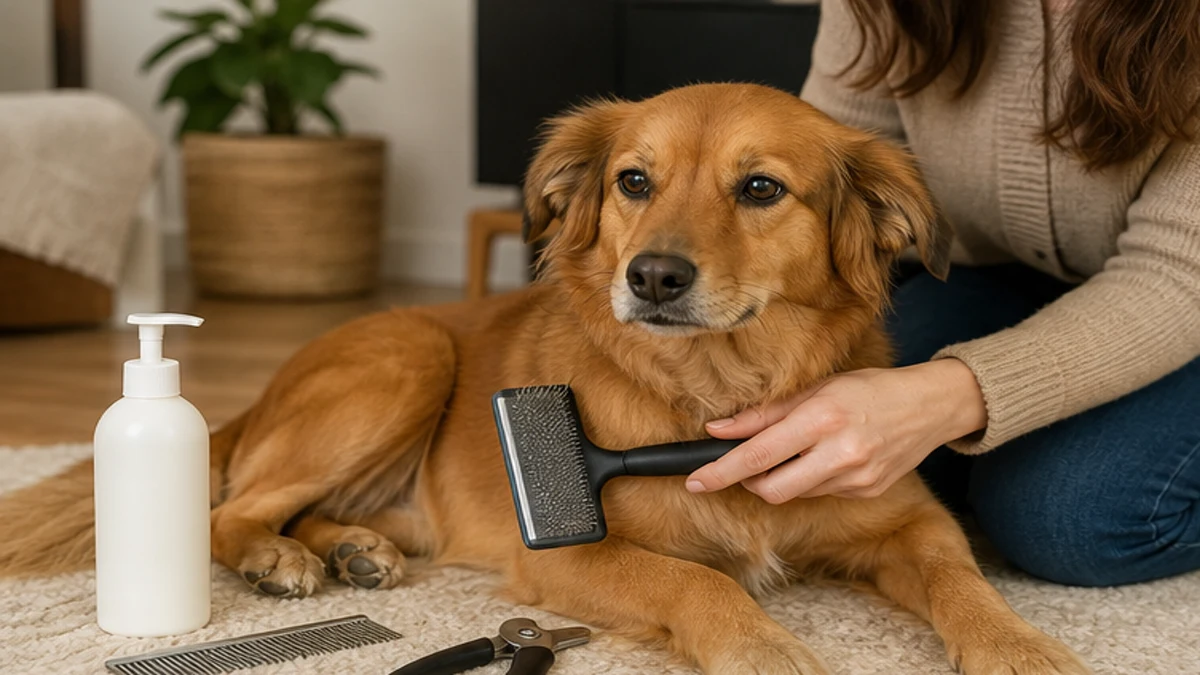
Brushes by coat type
The biggest grooming mistake is buying one brush and using it on every coat. Match the tool to the hair.
Short, smooth coats (most cats, Labs, Beagles)
A rubber curry brush or a soft bristle brush lifts loose hair and massages the skin. These coats need only light, frequent brushing — a few minutes a couple of times a week keeps shedding manageable and the coat shiny.
Double coats (Huskies, Golden Retrievers, many cats)
Double-coated pets have a soft undercoat beneath guard hairs. A slicker brush gently removes tangles from the top, while an undercoat rake pulls out the dense undercoat that shedding seasons unleash. Never shave a double coat to “cool it down” — the coat regulates temperature and protects skin; brushing is the right tool.
Long and curly coats (Golden doods, Persians, Yorkshire Terriers)
Long hair mats fast, especially behind ears, under armpits, and around the rear. A slicker brush plus a wide-tooth comb handles daily detangling. Curly coats in particular need consistent brushing to avoid painful mats that must be shaved out. A detangling spray made for pets can help ease knots.
Wire coats (Terriers)
A stripping comb or a pin brush maintains the crisp texture. Many wire coats need hand-stripping or professional clipping; ask a groomer about the right cadence for your breed.
The takeaway: one slicker brush and one comb cover most homes, with an undercoat rake added for double coats.
Nail care tools
Overgrown nails crack, catch on fabric, and alter a pet’s gait; in cats they can grow into the paw pad. Two main approaches:
- Clippers: scissor-style or guillotine clippers cut the tip. They are cheap and quick once you are confident. The risk is cutting the quick — the blood vessel inside the nail — which bleeds and stings. On light nails the quick shows as a pink line; on dark nails, trim tiny bits at a time.
- Grinders: a rotating file sands the nail gradually and avoids a sharp cut, good for anxious owners. They are noisier and slower, and some pets dislike the buzz.
Keep a styptic powder or cornstarch on hand to stop a bleed if you nick the quick — a rare, minor mishap that is easy to manage. If you are unsure, ask your vet or groomer to demonstrate once. Start nail care young so paws are handled without drama.
Pet-safe shampoo
Human shampoo is the wrong pH for animal skin and can cause irritation and dryness. Use a shampoo formulated for dogs or cats, and note that cats groom themselves and need cat-specific, low-residue products far less often than dogs. For dogs:
- A mild, oatmeal-based shampoo suits most normal coats.
- Medicated or antifungal shampoos are a vet-directed tool, not a casual choice.
- Puppy and kitten formulas are gentler for the very young.
- Skip heavily fragranced products that can irritate skin or put off a cat.
Bathe only as needed — over-bathing strips natural oils. Most dogs do fine every few weeks to a couple of months; indoor cats rarely need a bath at all. Always rinse thoroughly so no residue remains.
Ear and eye care basics
Ears
Healthy ears are clean, pale pink, and odor-free. Check them weekly. Use a vet-approved ear cleaner and a cotton ball to wipe the outer ear; never push anything into the ear canal, and never use cotton swabs inside. Floppy-eared dogs and swimmers are prone to moisture and infection, so dry ears after swimming. Redness, smell, head-shaking, or discharge means a vet visit, not a home remedy.
Eyes
Wipe crusty corners with a soft, damp cloth. Some breeds get tear staining that a vet can advise on. Any squinting, cloudiness, or discharge warrants professional care — eye problems escalate quickly.
Deshedding and the season shift
Most pets shed year-round indoors and heavily in spring and fall. A deshedding tool (a fine-toothed comb designed for undercoat) used a few times a week during peak shedding cuts the fur tumbleweeds dramatically. Pair it with a diet that supports skin health and plenty of water. Regular brushing also spreads natural oils, so the coat gleams and the vacuum rests.
How often to groom
There is no single schedule; it follows the coat and the pet.
- Short coats: brush 1–2 times weekly.
- Double and long coats: daily or every other day to prevent mats.
- Nails: check every 2–3 weeks; trim when they click on the floor.
- Ears: peek weekly, clean as advised.
- Baths: dogs every few weeks to months; cats only when truly needed.
Frequent, short sessions beat rare marathons. Five minutes most days prevents the matted, stressed ordeal of neglected grooming.
Making grooming positive
A pet that learns grooming is safe will cooperate for life. Build it slowly:
- Handle paws, ears, and tail during calm cuddle time so touches are no surprise.
- Pair every session with treats and a calm voice.
- Start with one brush stroke, reward, then build duration over days.
- Keep sessions short and end on success, not struggle.
- For cats, groom on a stable raised surface and watch for overstimulation; stop before they swat.
- If a mat is tight or near skin, let a groomer or vet remove it rather than cutting risky close.
Never punish a pet for squirming; that only confirms grooming is scary. Patience here pays off in a pet that hops up for brushing.
When to call in a professional
Some jobs are better left to a groomer or vet. Severe mats tight to the skin, anxious pets that bite during handling, breed-specific clips, and any task near the eyes or ears are reasonable to outsource. A good groomer also spots skin issues early and can demonstrate techniques you can copy at home. Book the first visit early in your pet’s life so the experience reads as normal rather than a stressful event, and use professional help as a complement to your routine, not a replacement for the gentle handling that keeps your pet trusting.
A starter kit
A sensible first kit: a slicker brush, a wide-tooth comb, an undercoat rake for double coats, nail clippers or a grinder with styptic on hand, a pet-safe shampoo, an ear cleaner, and soft cloths. Add a deshedding comb in shedding season. With these and a gentle routine, you will keep your pet comfortable, clean, and healthy — and you will notice problems early, when they are easiest to address.
PawPals provides educational content for new pet parents. We are not a veterinary practice, and this article is not a substitute for a veterinarian’s diagnosis or treatment. If your pet shows signs of illness, contact a licensed veterinarian.
Related reading
Pet Gear Worth Buying First on a Tight Budget
A priority list for new dog and cat owners: what protects safety and daily care first, and what can wait until later.
Read the guideChoosing a Carrier for Travel and Vet Visits
A practical, non-sponsored guide to hard vs soft carriers, sizing, ventilation, top-loading designs, acclimation, car safety, and airline rules.
Read the guideCat Trees and Scratching Posts Explained
A practical, non-sponsored guide to why cats need vertical space, choosing height and stability, sisal vs carpet, placement, and multi-cat sizing.
Read the guideThis article is for education only and is not a substitute for a veterinarian's diagnosis. If your pet shows unusual symptoms, see a vet.