ID Tags and Microchips: Keeping Pets Findable
A practical, non-sponsored guide to collar tags, how microchips work, QR tags, keeping registry info current, and what to do if a pet goes missing.
An independent educational guide, not a veterinary consultation. Sources, illustrations & editorial standards
The single most heartbreaking and most preventable event in pet ownership is a lost animal with no way home. A pet with proper identification is dramatically more likely to be returned. Identification is not one thing but a layered system: a collar tag for the person who finds your pet today, and a microchip for the system that finds them later. This guide explains collar tags, how microchips actually work, QR tags, the critical job of keeping information current, what to do if a pet is lost, and prevention habits that stop loss in the first place.
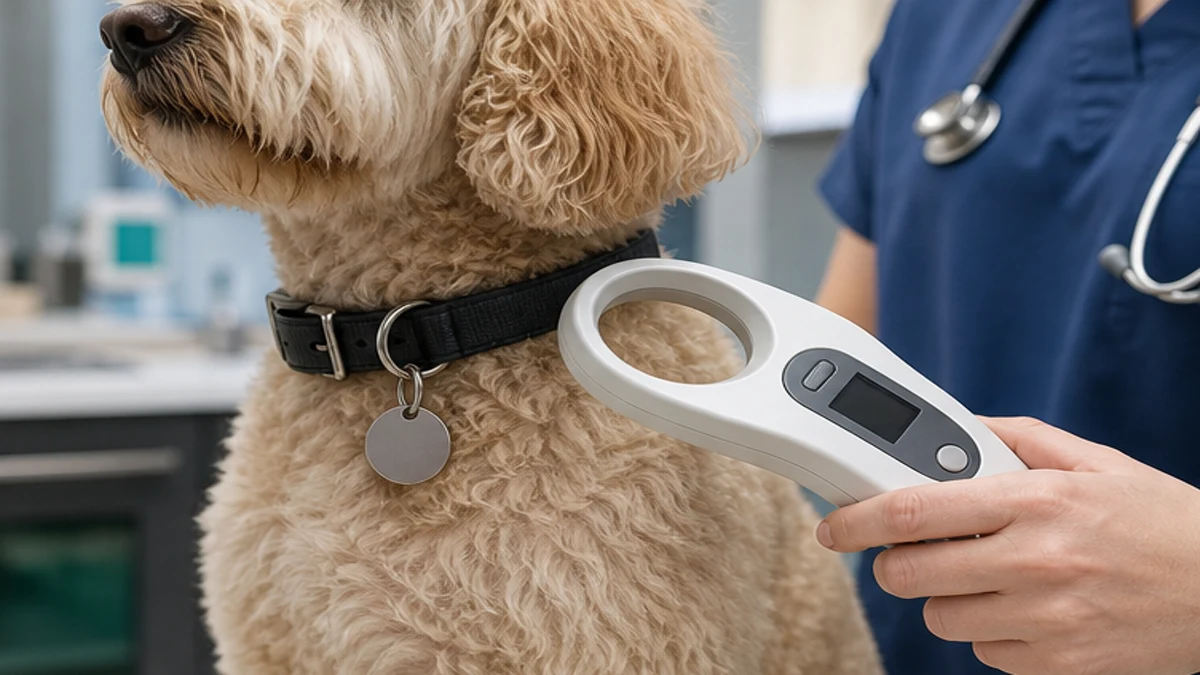
Collar tags: the everyday ID
A collar with a readable tag is the fastest route home. The person who finds your cat or dog may not have a microchip scanner, but almost anyone can read a tag and call the number on it.
A good tag carries:
- Your current phone number (a mobile you answer).
- The pet’s name (optional but friendly).
- A note like “I’m lost, please call” or “reward” if you wish.
- For some, a city or “needs medication” note.
Keep the tag securely riveted or clipped so it cannot fall off, and check it monthly for wear that fades the engraving. For cats, use a breakaway collar — one that releases under pressure — so a collar caught on a branch does not strangle the cat. Dogs can wear a standard well-fitted collar, snug enough not to slip over the head but loose enough for two fingers underneath.
How a microchip works
A microchip is a tiny rice-sized chip, about the size of a grain of rice, implanted under the skin between the shoulder blades by a veterinarian or clinic. It is not a GPS tracker and has no battery; it does nothing until a scanner passes over it and powers it briefly to read a unique ID number. That number links to a registry entry you created with your contact details.
Key facts new owners should know:
- The chip is permanent and lasts the pet’s life; it cannot fall off like a collar.
- It is a quick, mildly uncomfortable injection, like a vaccine, not surgery.
- Shelters and clinics routinely scan found pets for chips, which is why it works.
- A chip without a current registry entry is nearly useless — the number points to a blank or outdated record.
- Microchipping is distinct from licensing; some regions require a municipal license tag too.
A common myth is that a microchip tracks location. It does not. It only identifies the pet when scanned. Pair it with a collar tag for the everyday find.
QR and smart tags
Beyond classic engraved tags, QR tags and some smart tags have appeared. A QR tag, when scanned with a phone, opens a web page with your contact info and the pet’s details; some let you update the page without replacing the physical tag. Smart tags may add notifications when scanned.
These are a useful supplement, but treat them as a backup, not the main ID:
- They depend on the finder having a smartphone and choosing to scan.
- A dead battery or no signal can defeat an electronic tag.
- The tried-and-true engraved phone number still works for anyone, anytime.
Used alongside a standard tag and a microchip, a QR tag adds a layer. Used alone, it is a weak safety net.
Keeping the information current
This is where most ID systems fail. A chip implanted by a previous owner, or a tag with a long-gone phone number, sends a found pet to the wrong place. Make these habits:
- Register the microchip the day you adopt the pet, with your own details.
- Update the registry every time you move or change phone numbers.
- If you rehome a pet, transfer the chip record to the new owner.
- Note the chip’s brand and number in your phone and on paper at home.
- Check the tag text yearly; replace faded or outdated tags promptly.
Ask your vet to scan the chip at annual visits to confirm it has not migrated and still reads. A five-minute yearly check protects years of safety.
What to do if your pet is lost
Act fast and widely. The first 24 hours matter most.
- Search the immediate area on foot, calling calmly; many pets hide nearby.
- Check with neighbors, and leave a worn item with your scent outside in case they return.
- Post clear photos and your contact info to local groups, vet clinics, and shelters.
- Visit nearby shelters and animal control in person; don’t rely only on calls.
- If chipped, confirm your registry is live and your phone answers.
- For cats, search at dawn and dusk when they are most active and least fearful.
- Avoid chasing a frightened pet; sit quietly with food and let it approach.
The combination of a visible tag and a registered chip multiplies the chance a finder can reach you before the pet ends up in a faraway shelter.
Prevention: the best recovery plan
No ID replaces not losing the pet. Build habits that cut risk:
- Microchip and tag every pet, including indoor cats — many escapes happen through open doors.
- Use a secure carrier and leash for travel; never let a pet roam loose.
- Check fences and screens for gaps; cats slip through surprisingly small holes.
- Make entryways a two-step buffer: close the outer door before opening the inner.
- Supervise new pets in unfamiliar places until they trust you and the space.
- Practice a recall cue and reward it, so a startled pet is more likely to return.
Indoor-only cats still need ID: a terrified indoor cat that bolts outdoors has no street sense and no way home without a tag and chip.
Microchip versus GPS trackers
It helps to separate the two. A microchip is a permanent, battery-free ID that works only when scanned by a clinic or shelter — it identifies, but does not locate. A GPS tracker is a separate device, usually clipped to a collar, that can show a pet’s live position through your phone, but it needs power and often a subscription, and it can fall off with the collar. Many owners use both: the chip as the permanent backup, the tracker for active locating. Note that a GPS unit is only as good as its charge and its fit, so check it before any outing. Neither replaces a visible tag and a current registry.
A layered approach
Think of identification as three layers. Layer one is the collar tag a stranger can read today. Layer two is the microchip a clinic or shelter will scan. Layer three is the current registry and any QR supplement that ties the ID to a real, reachable you. Missing any layer weakens the chain. The pet that wears a tag, carries a registered chip, and has an owner who keeps the record current is the pet most likely to walk back through the door.
PawPals provides educational content for new pet parents. We are not a veterinary practice, and this article is not a substitute for a veterinarian’s diagnosis or treatment. If your pet shows signs of illness, contact a licensed veterinarian.
Related reading
Pet Gear Worth Buying First on a Tight Budget
A priority list for new dog and cat owners: what protects safety and daily care first, and what can wait until later.
Read the guideChoosing a Carrier for Travel and Vet Visits
A practical, non-sponsored guide to hard vs soft carriers, sizing, ventilation, top-loading designs, acclimation, car safety, and airline rules.
Read the guideCat Trees and Scratching Posts Explained
A practical, non-sponsored guide to why cats need vertical space, choosing height and stability, sisal vs carpet, placement, and multi-cat sizing.
Read the guideThis article is for education only and is not a substitute for a veterinarian's diagnosis. If your pet shows unusual symptoms, see a vet.